Showing posts with label quality. Show all posts

Sunday, November 23, 2025

Architectural Integrity Meets Primal Wellness: Engineering a Sauna for Optimal Health and Durability

As professionals in the building environment, we know that true quality emerges when design decisions are made with both aesthetic beauty and structural resilience in mind. I recently completed a project that perfectly illustrates this principle: a deeply integrated sauna structure designed to withstand extreme conditions while offering profound health benefits.

The Challenge of Placement and Access

Building on a difficult site demands meticulous planning and execution. The location of this sauna required significant manual site preparation. Due to the rugged terrain, moving all necessary building materials was a challenging logistical feat, emphasizing the premium placed on every element chosen for the final structure.

Constructing the Perfect Envelope: Defying the Dew Point

When designing a space defined by intense, fluctuating humidity - like a sauna - the issue of the dew point becomes paramount. Condensation forming within the wall cavities leads directly to rot and mold, compromising both the building's longevity and occupant health.

Our crucial design decision to combat this involved constructing robust, layered wall assemblies that deliberately encourage airflow between the building layers. This controlled ventilation system ensures a perpetually dry building by carrying away moisture vapor before it can condense within the envelope. This preventative measure is fundamental to promoting a durable and structurally sound building for decades. Visible elements of the construction include vertical stud framing and insulation materials integrated into the wall structure.

Performance Through Precision Materials

We selected materials not just for their looks, but for their commitment to performance:

Custom-Milled Rhombus Siding: The exterior features unique custom-milled rhombus siding. This deliberate profile enhances the building's aesthetic appeal while serving as an effective rain screen, supporting the ventilation strategy and rapid drainage.

Triple-Glazed Windows: Windows are often the weakest thermal link. To mitigate heat loss and maintain a high level of energy efficiency, we specified high-performance, triple-glazed windows. This choice minimizes thermal bridging and ensures internal glass surfaces remain warm, further preventing condensation risks inside the heated space.

Article content
The custom milled rhombus siding was not only aesthetic, it was also the least expensive.

The Heart of the Ritual: Heat, Cold, and Restoration

The interior is designed around the powerful, transformative experience of the heat and the stones. A moderately sized stove capable of holding a substantial volume of volcanic stones dominates the space, crucial for generating rich, intense löyly (steam). Heating the space is a manual process, requiring tending to the firebox to achieve the desired temperature. Three large spoonfuls of essential oil infused water poured over the hot stones brings the temperature up in 3 - 5 degree bursts.

Article content
Adding essential oils to the water before pouring over the hot stones provides additional wellbeing.

The sauna and the associated features are intended to work together as a holistic wellness facility. The structure is integrated with a separate, adjacent cold feature, built by converting the properties legacy surface well. The below-grade concrete structure and ladder is designed for a splash or cold plunge - that is situated a few steps from the sauna building. A deep breath and quickly lowering yourself into the 6'6" pool allows you to emerge into a different dimension.

The Thermal Cycle for Deep Wellness:

The full restorative experience involves cycling between the heat and the cold. Based on traditional practices, the cycle emphasizes a deep heating step followed immediately by a rapid cooling phase.

A suggested cycle involves:

1. Heating: Spending time in the intense heat of the sauna.

2. Cooling: Transitioning directly to the cold plunge or splash pool for up to three minutes.

3. Rest: Resting outside for another 5 to 10 minutes before returning to the sauna.

This cycle is typically repeated three times to maximize circulatory benefits and promote relaxation. Taking the opportunity the sit and relax in the cool air, or by an outdoor fire, and breathe deeply further enhances the experience.

It should be noted that while the existence of the heated sauna and the cold plunge structure is supported by the sources, the specific timing, duration (3 minutes in the pool, 5-10 minutes outside), and repetition count (3 times) for this wellness protocol are details that need to be considered by the user. Know your body and how it responds to heat and cold cycles. Good to consult with your physician before using a sauna and cold pool.

Article content
Sunset and views from the sauna are outstanding. And the deck provides enough space for laying about and completing a few yoga postures.
Article content
The colour of the wood burning firebox always adds to the ambience and provides enough light to choose a few more pieces of wood organized under the interior bench seats.
Article content
The dry summer months also provide an opportunity to maintain the lands around the sauna and splash pool.

This project demonstrates that successful architecture transcends mere shelter; it is about engineering environments that actively support health, durability, and a profound connection to beneficial natural rituals.

Thursday, March 19, 2020

Digital by Design, Agility and Data Architecture

For 12 months, starting the summer of 2018, I was very fortunate to fill the data architect role for the Government of Newfoundland and Labrador's digital by design citizen facing web portal. An amazing team was brought together and we accomplished an amazing amount of work given the complexity of the environment we were all working. Kudos to the leadership team for seeding the ground and pulling together a diverse and effective group of people.

Being the oldest team member, with 35 years as a technology professional, I noticed a number of items and approaches that I consider the highlights of the project. I call out my 35 years experience because I know success doesn't always happen in a large group of people (with a team larger than 35). A group of strangers doesn't always come together when tasked to ship software on schedule and on budget. The cool part of this project is that the highlights were both technical and project management. In a nutshell, we came together using a scrum model of project management (hosted within JIRA) and architected a microservices technology stack using predominantly Microsoft technologies. The user experience design was exemplary and the software approach stayed aligned with the best of agile practices. We also used a scrum of scrums approach to manage the three distinct scrum teams.

What made this first year of a new project so effective?

The Agile Practices
The team was encouraged to use Agile approaches to successfully ship software. Thankfully, the commitment came from the most senior level and agile workshops were used to align the teams understanding and approach to agile. I consider these three agile practices what kept us all well aligned;
  1. We rigorously stayed with 3 week sprints. This was facilitated by the scrum of scrums group and kept us all focused on shipping working software.
  2. We embraced jira and stayed true to moving cards. It took a few sprints, as a whole we ended up having all the team members updating and moving cards. This, combined with morning standups, kept the team transparency high and important issues in the open.
  3. We always had demo days and retrospectives. This went a long way to keeping us focused and successful. All team members were encouraged to attend the other scrums demo days, this built excitement and kept us focused and moving.
Software Engineering Discipline
Developing software is as much art as it is science. Our team included many accomplished software engineers and this helped us implement features quickly and completely. Kudos are deserved by many on this project team, in particular, one of our technical leads (this is you, Phil) was hellbent and lead through example with two attributes of software engineering that are super important and sometimes missed;
  1. We refactored always, no excuses. As a group we were always learning, as implementing features is a relentless teacher. Improving upon our code base through refactoring kept the quality improving, and the bugs low. Even from a data architecture perspective, at the beginning of each sprint we refactored the data tier with the required data changes from the previous sprint. Data tiers often have different heart beats that the middle and user tiers as they are dependent on the legacy systems, which often have legacy heart beats. This is a blog post in itself...
  2. Automated testing. We automated whenever we could, we aspired to have automated tests with coverage to all our code. We got close by using frameworks and having a test first mind set. And don't underestimate how effective existing testing frameworks can be applied to the data tier.
Architecture was collaborative 
All architects were encouraged to contribute and discuss, we were always white-boarding and soliciting feedback. This kept the architecture strong and well understood throughout the team. And because we had a shared understanding of architecture the refactoring was reduced. All good...

Wednesday, June 27, 2018

Work Life Balance for the Sandwiched CTO

Never more in my life have I required work-life balance and understand what it means at a personal level. This all started when I accepted a CTO position with Bluedrop Learning Networks ( a great organization with a good alignment to my career journey ). The interview process was extensive and I had the opportunity to meet all corners of the team I would be working with. Overall a good and thorough process. Kudos to everyone involved! The interview process included multiple discussions about work-life balance, and how I (in my mid-50's) have four aging parents over 80 years, two middle-school age children, one young adult age child, a bunch of volunteer activities, personal interests that I wont let go, and three residences to maintain. Oh yes, and a spouse who is an family doctor who also works in palliative care... needless to say I am often the go-to person when a short notice family issue arises. All this said, and after a few important conversations I had to let go of my new CTO role after only six months. I needed to focus on what I consider most important for my family. Though I am not an entrepreneur ( - though, I do think a good CTO needs to have the entrepreneur mindset - ) I completely agree with Randi Zuckerberg about approaches to managing the workload of a senior professional, or also known as the entrepreneur's dilemma.
For me, it's that simple. It's the implementation that will be the hard part. I need to have spending time with family, staying fit (in good health), and getting sleep to be my priorities. And I need to organize my life around these three and the others come in between or when priorities change. Something important to consider is that these five items need to be put into the larger context of a life well lived through a whole lifetime. That means you pick three on a daily, weekly, or yearly basis. Set your priorities for the day and/or week and follow through. This allows for flexibility within the entrepreneur's dilemma. In other words;
As you can see I also added one, be creative... my thinking around this aligns with having the time to think and create, free the brain to focus on the abstract and artistic and to wonder aimlessly... it is an important part, and keeps your edge in a world where innovation is becoming increasingly important.

Friday, January 19, 2018

Career success in three year cycles

My career seems to go in three year cycles. I've given up trying to determine if this is my unconscious doing or my skills and knowledge lend themselves very well to successful three year project life-cycles. Either way, I'm 35 years into a successful technology career and another three year cycle is coming to an end. And I'm very excited with what is coming! Before I get into the details of the most recent cycle I went back over my past 12 years of blogging to get a sense of my working ebbs and flows, and to confirm my three year cycle theory. The past four, three year cycles also seem to swing from being an employee to working on startups and as a consultant;

My most recent three year cycle has been with Provincial Aerospace (PAL) in St. John's Newfoundland. It has been a fantastic and exhausting three years. If I was to pick a few themes, they would be; team building, shipping software, quality management, and an acquisition. So what do I consider my achievements over the past three years and where do I best give thanks. In giving thanks, I will not be calling people out by name - they know who they are.
  1. Team Alignment
  2. When I joined PAL there was so much raw software engineering power with good team trust and camaraderie that my focus immediately moved from team building and skills development to team alignment and clearing the way for their success. And successful they were! We got to the point where every customer was very satisfied and we had solved some lingering and potentially expensive issues.
    Special Thanks: I want to give thanks to PAL senior management for being patient, keeping the team together, and trusting me to start shipping software. It took some time, we had to clean up some minor releases and complete a significantly complicated major release with a very broad deployment scope.
    • SED Team
    • What is most important here is the team was solid within itself as a software engineering team. They had very good end-to-end practices and audit proof trace-ability. The organization as a whole struggled with getting software out to the production environments due to many factors. Keeping in mind deployment is beyond the responsibility of the software engineering team and we had to deploy into highly secure customer networks in very rugged environments. Once we had a realistic schedule the team held the vision for success and delivered.
      Special Thanks: I want to give thanks to our project manager who is insanely detailed in the best of ways and the team for not only building quality code, but taking on the quality assurance roles for each others work. 
    • Business Intelligence Team
    • Innovation within a strong corporate culture can be hard and an organization will struggle to understand a team with a different rhythm and dance step. And the pressure for the team to align itself back with the corporate rhythm will be ever present and an effort to avoid. If you want innovation you need to allow teams to dance a different step, and allow them to master their new dance. We built a scrum - agile data analytics / business intelligence team from an exceptional group of transactional developers used to a more waterfall type development approach. It took us 12 months (which I consider a short time) to have a performing group of analytics and intelligence developers who ship new data dimensions in a sprint cycle time of 4 - 6 weeks.
      Special Thanks: I want to give thanks to the whole team for deeply embracing the learning toward becoming knowledgeable analytics developers. With the ability to analyse, design, develop, and deploy for multidimensional data from a plethora of different data sources. I want to thank the scrum master for holding the vision toward the value scrum would bring. I want to give thanks to the business intelligence consultant we brought in for the first six months of the project, they did an excellent job of leading by example and transferring the knowledge required to get the team more than started. I again want to give thanks to PAL senior management for being patient, keeping the team together, and trusting that the data dimensions will come and the team would exceed the targeted number of KPI's.

  3. Shipping Software
  4. Shipping software can be really hard or it can be simple and repeatable. Shipping and deploying software has become an understood and well managed process as the practices have built toward Agile approaches and DevOps over the last 10 - 15 years. The time of failed non-deployed projects should be a thing of the past. If its not, you should either; clear house at the senior leadership level or send everyone to upgrade their literacy of how to provide leadership to software and technology development.
    Special Thanks: I want to give thanks to the team leadership who came before me. The use of Microsoft TFS within the SDLC made team alignment really easy. I also want to give thanks to the team for adapting so well to adopting more agile and devops type approaches. I may have cleared the way, but the team did the real work!
    • IDNS 2.x (ADAM8 and SIS)
    • This was an eighteen month project that included many major features within its release scope. The main considerations for the project were;
      1. the schedule restraints [we could NOT go-live to production during iceberg-season (Feb - June)]
      2. the breadth of the feature set we were delivering included;
        • Increased security constraints
        • Service Orientation
        • Directory Integration
        • Content Management
        • Geo-referencing with advanced search
        • Off-shore client deployment
        • Legacy application support
      3. deploying to a new data center and multi-server architecture.
      4. Having two versions run in parallel for an ice-season to allow for comprehensive testing and customer network / security integration.
      Special Thanks: I want to give thanks to everyone involved with this project to hold the vision and getting to finished. We exceeded expectations. I'd also like to give thanks to the IT department for building out the infrastructure, owning the active directory deployment, and being sure we are secure to the levels required by our customers.
    • Business Intelligence - Data Analytics
    • We started to ship software as releases of new data dimensions (or clusters of key performance indicators). Once we had the basic infrastructure in place with the beginnings of the Extract, Cleanse, Transform, and Load (ECTL), data marts and warehouse we moved into using a scrum type approach to ship new dimensions out of each sprint. This worked well as it gave a reasonable velocity to complete a set of deliverables and then have retrospectives for learning. The team shipped 12 cubes with consistent and interval data refresh which took data from three distinct and distributed data sources. The challenge going forward for the team is in assisting the product owners and subject matter experts in leveraging all the cubes into dashboards and analytics.
      Special Thanks: I want to give thanks to the team for putting in the extra effort from being on a steep learning curve and focusing on the delivery of data cubes as our measure for success. I want to recognize the commitment of our senior developer in being a learning machine of the business intelligence and  data analytics subject domain. I want to give thanks for our DBA taking on all the system and database level tasks to make the project a success.

  5. Quality Management
  6. I'm a strong believer that good software quality management (QMS) brings significant business value. The value comes from; being able to ship software on schedule and on budget, more easily integrating new and unexpected features, ease in adding and training new team members into well known process', and the ability to easily address the scrutiny from customers, auditors, and potential investors. Our team regularly exceeded the procedures and practices within our quality management system and much of our success was due to this rigor.
    Special Thanks: I want to give thanks to the PAL director of quality, she saw beyond the business of quality certification and her enthusiasm for quality made us all better. I want to again give thanks to our project manager; her commitment to process, record keeping, and traceability is a thing to behold.
    • Rock solid processes
    • We were fortunate to have developed an end-to-end SDLC process that was reflected in our use of Microsoft TFS. The team was committed to following the process' and we passed all our insanely rigorous ISO audits. We were continuously improving our process' to better suit a more effective and efficient SDLC. We adjusted our QMS to our practices, rather than adjust our practices to our QMS. And our adjustment followed solid change management practices.
      Special Thanks: I want to give thanks to the software engineering groups leadership team for being willing to continuously improve our SDLC as it was reflected within our QMS, and vice-versa. I want to give thanks to the team for following our practices. I want to give thanks to the auditor for providing candid feedback and encouragement to make change within our ISO certification.
    • Traceability
    • Having the ability to see an idea through to working software is an accomplishment. Having evidence of how the idea became working software, from an auditors perspective, is a thing of beauty.
    • Multiple Successful ISO audits 
    • Special Thanks: I want to give thanks to all those who participated in our ISO audits. They can be stressful, but for us we embraced them and used them for our continuous improvement.

  7. An Acquisition
  8. I feel very fortunate to have had an amazing 35 years working within the technology realm. I've written a lot of code, tuned my share of databases, managed a number of talented teams, architected working solutions that are used daily across Canada and around the world, and held leadership roles with amazing peers. I have had my share of working with startups as an employee, shareholder, and outsider performing technical due diligence. My 30 years in the Vancouver technology scene included working with angel investors and VC's to perform technical due diligence to provide them much needed information. During my time at Provincial Aerospace I was asked to again perform technical due diligence for the PAL acquisition of CarteNav. What made this different is it the first time I did it as an employee of the acquiring company. And fortunately I became a member of CarteNav senior team after the acquisition. This allowed me to see firsthand some of the success and challenges that happen during the first 18 months after an acquisition. Such a great professional experience.
    Special Thanks: I want to give thanks to senior management for giving me the opportunity to see an acquisition from the other side. It confirms that acquisitions success are about cultural integration during the months that follow. I also want to give thanks to the top tier consulting firm that confirmed my due diligence findings, and were very focused and gracious. I want to give thanks to the CarteNav leadership team (and all the CarteNav employees) for being so welcoming and working so hard through the challenges that come with any acquisition.
So there you have it, a reasonable summary of the standout themes from my last three years working with Provincial Aerospace. My next adventure begins... more on this to come. Be well...

Tuesday, July 16, 2013

auto-delete all email

My life has offered me an opportunity to go off the digital grid for an extended period of time; five weeks, or 36 days to be exact. On July 27th I fly to Calgary to join my Family as we move from Vancouver, BC to St. John's NL. On August 31st I arrive in St. John's to start a new life adventure.

How I define off the digital grid:
  • No social media - No Google+, No facebook, No linkedIn, No Twitter! Essentially, I never open a browser on any device. I will post a status update to my being off the grid, so people know to contact me on or after September 1st.
  • No email -I will not check my email ever, on any device. I will set-up an out of the office notice, and I'm going one step further; I will auto-delete all my incoming email.
  • No browsing - The only reason I will ever open a browser is to research travel details, book accommodations, or to get further information regarding a site we will be visiting. If I need to leave contact details with a booking or something, I will use my cell phone number.
Why I am auto-deleting my email?

Because I don't think there is anything so important that could be in an email. Most important information in my life is face to face or a voice conversation. But why auto-delete and not read my email when I am back on-line? Because its the past... its forever gone. If something matters to someone so much and it can't wait a few weeks, they can call me or send me a text. I also want not to have a a massive email box to go through at the beginning of September, and I don't want the possibility of thinking about the build-up of email and think about getting a jump on emptying the email box at any point in my vacation.

The morning we departed Bowen Island
I believe this gets into a conversation about mindfulness and being present. As I grow older I find that being present within a situation provides the most success for everyone involved. What I mean by present is I am not distracted by tasks and/or information from another context or situation.This holds true for when I am with my children, being with my spouse or family, when I am at work, and just going through my day. So really, why should I be concerned about an email that was sent a few weeks back. In a way, all email is spam.

What is my fear? Well not really...

That I will miss an email that is really important. If it is important they can call me or send a text. What about a work opportunity or a life opportunity that I will regret having missed. Honestly, I don't believe that these kind of opportunities come from a single unsolicited email. If it is important, it needs to be important to all involved, and therefore the others involved will honour my vacation and get back to me in September. If the opportunity is gone, then it wasn't an opportunity that would have interested me.

What is my preparation?

The two weeks leading up to my going off-line I will make status updates across all my social media, so people know of my being unresponsive. And if they want to contact me before my departure they are given an opportunity.

Why am I doing this?

Because I have five weeks with my wife and children, and I want to enjoy every moment. I don't want to find myself wondering off into some other context or perceived obligation. I don't want to be distracted by something other than exploring the amazing country of Canada, every moment. I don't want to miss something in my immediate proximity by an information thread from somewhere else. I also want to read a few paperback books... which has eluded me over the last while. I want to play in the immediate and enjoy all that my five senses have to offer. I believe all this will be more available without a digital connection to my past or my future.

Tuesday, February 19, 2013

Peter Rawsthorne's Career Narrative

Family on Quiniscoe Summit, 2551 m
I really do love to build and integrate software solutions, particularly internet solutions. And the more information sources and distribution, the better. I am truly invigorated when building solutions that take the complexity of a well thought out business strategy and create kicking customer facing internet portals. I also get jazzed when the solution directly supports the business' back-end processes so the business can be smarter and more nimble. If there is uncertainty around strategy due to the project being a start-up idea (or wild-ass dream), I can proceed with experience using agile and lean approaches. I can create a project heartbeat where we ship regularly with focus on customer need and successes. This is all fun for me, and if all this falls within the knowledge management or adult education domain, all the better.

Over the last 23 years I have occupied almost every role within the development of information technology software and internet solutions; I've worked as a programmer, a database administrator and solutions architect, through to manager of information technology. I have been successful in large organizations, in small internet start-ups, and many organizations in between. I feel it is a great accomplishment that I can bring projects to completion regardless of when I join the project and within any technical or leadership capacity. I believe it is important to finish the things we start.

I am excited about opportunities with medium sized organizations and consulting firms who are looking to innovate their business through information and internet technology or assist others in improving their business through technology innovation. My experience and education would have me in the role of senior solutions architect, consultant, or director of information technology.

If you have an interest in working together please do not hesitate to contact me; peter AT rawsthorne DOT org.

If you want to view my career history my linked in profile is a great place to start; http://www.linkedin.com/in/prawsthorne

Sunday, January 27, 2013

Responsibilities of Institutions

Over the last few days there has been a bunch of work taking place to describe the rights and principles of network learners. The original document was drafted by an amazing group of people, for whom I have a great deal of respect. I also have a great deal of respect for everyone who commented on and contributed to the rights and principles of networked learners. The one disappointment I have with this document is that it was written by this amazing group from the perspective of the learner (or student), and didn't focus more on the responsibilities of the institution. Don't get me wrong, I think this is an amazing piece of work and I am very happy it has been started. Given the influence this group would have, it would be great if they would also write the responsibilities of institutions and then advocated for them to be adopted by the institutions for which they work or are affiliated. If we were to have this activity from both the learner and institutional perspectives, then we would really have something!

Thursday, January 26, 2012

Personal Curriculum Mapping (PCM)

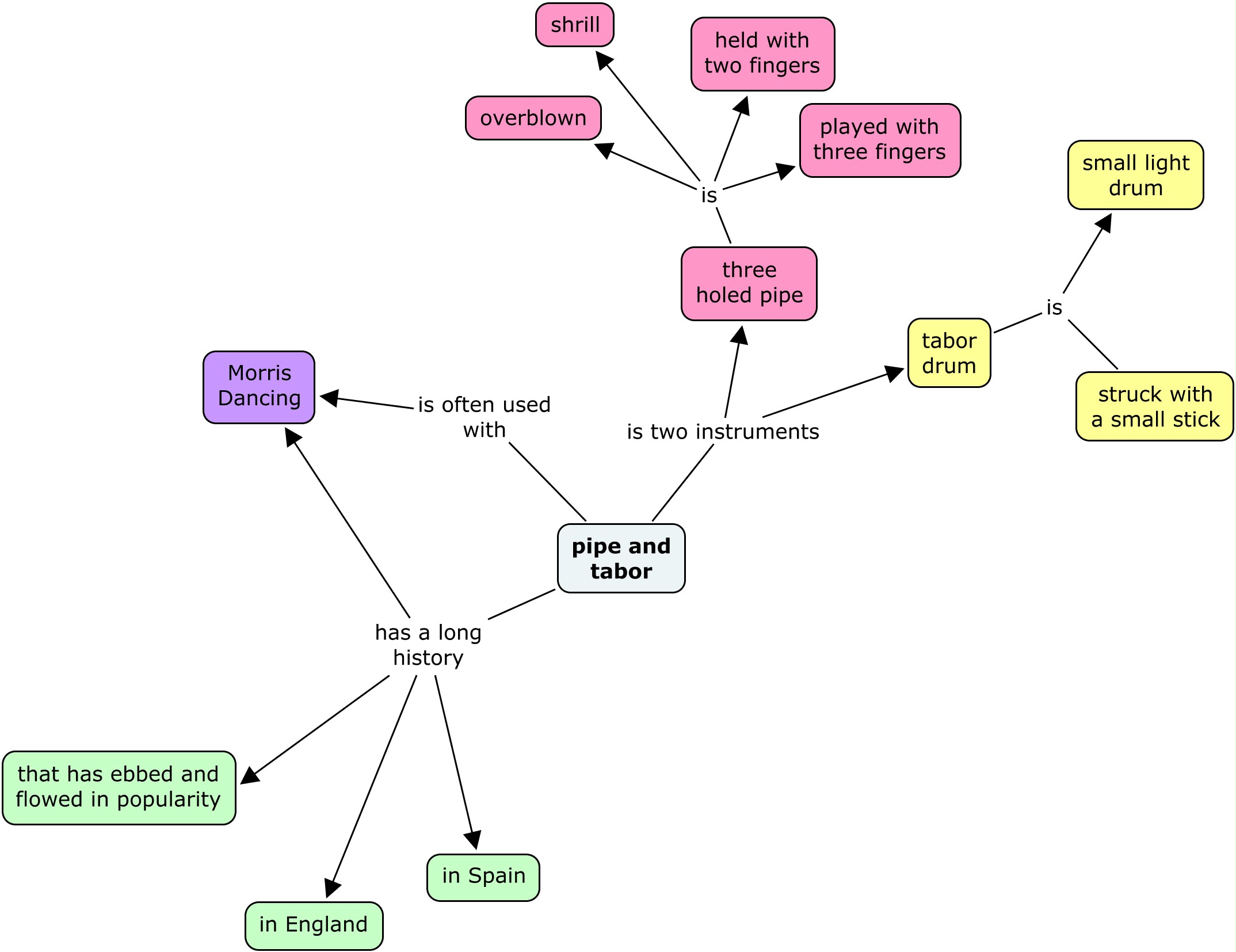
Personal Curriculum mapping can begin with a Concept Map.

I believe one of the missing pieces of the Personal Learning Environment (PLE) is Personal Curriculum Mapping (PCM). I've thought this for a while and have discussed it with friends during my conversations around an OpenPhD. This was greatly reinforced by watching Dr. William Pinars conference speaking video regarding his recent paper "Allegories of the Present: Curriculum Development in a Culture of Narcissism and Presentism." I took many things from this video and what stood out from a curriculum development perspective is it needs to be individualized and have the engagement of the learner. This will provide the learner greater attachment to the materials, content and context for learning and force a reflection of the subjects history, present and possible futures. This reflection will provide them a deeper connection to their chosen subjects curriculum and to humanity as a whole.


I was also inspired by this 2011 Wilma Kurvink webcast from the ASCD conference. It provides some wisdom about how to map curriculum within a learner focused approach. It talks of how curriculum development, at a high level, is better done by others outside of the subject matter area who have insight into how the subject relates to other subjects and where learning content could be missing when looking at the whole of curriculum. Librarians are a good example for they can be unbiased regarding a subject area; therefore, not a stakeholder in curriculum mapping. You may want to consider finding a few librarians to be a part of you personal learning network.


If you want more reference to Wilma Kurvink's work on this subject follow these two links;
  1. accompanying ppt slides from the presentation.
  2. website that provides a hyperlinked description of the approach.
This is a follow your bliss kind of thing; but you really do need to get to know how you learn and what you are motivated to spend your time learning. This is step 0 of creating your own personal curriculum map.

This is how I alter Wilma's 5 step process to become more personal (Note: it is not not a linear process and therefore fits well within Agile Learner Design)
  1. audit the unit - get to know the subject matter landscape, review all the resources you can (academic and otherwise) to get an understanding of the subject area and what you know of it. What skills are needed for success? Where would you start your focus? Where does context fit?
  2. use student perspective - how do you personally relate to the subject area? Are you excited to emerse yourself in the subject? Where would you share your learning and excitement? How does all this relate to what you already know.
  3. confirm revised skills/content/focus to matching tools -  from the audit you may have identified new skills required, you need to develop learning plans to acquire the required skills. Look to new web2.0 tools to also assist here. Identifying the important skills is the best place to start. This is where it gets fun, for you need to devise / identify ways to assess your mastery of the skill. Be sure to communicate and engage you social network here. How does this iteration of learning relate to previous skills/content/focus iteration? What is new? What has changed?
  4. ensure tools align with key focus of unit - once all is done has your learning and work aligned well with the focus of the current iteration. Has your assessment approach worked. Would building your own rubric to assist here? Your personal learning network should be engaged here!
  5. evolution of student perspective - this is where you need to assess the current iterations learning against the skills and knowledge you set out to develop. This then feeds back into step 1. the audit of the unit. Iterate! And remember, keep blogging!
Creating a Personal Curriculum Map is a very important first step while envisioning and planning your Agile Learning. Having to develop your own curriculum is important to building your understanding of the knowledge domain being pursued in your learning. The process of creating the PCM is also iterative, so the map doesn't need to be complete to begin your learning. Once a skill or two has been identified within the subject (or curriculum) domain the learning can begin. And during the iteration a better understanding of the curriculum will develop. The curriculum map is also very personal for it connects you with the skills and knowledge from the past and the present. It will also provide insight into the future. As Dr. Pinar believes the understanding of the past and present of a subject domain connects you with all of humanity. And what makes this even easier is that creating a curriculum map that is personal could be one of the most important things you do. In the timeless words of Bruce Lee, "(Hu)man, the living creature, the creating individual, is always more important than any established style or system".

Getting Started with PCM
To get started with creating a personal curriculum map simply phrase the learning as a question and begin to build a concept map. In the above example I state that I want to learn to play the pipe and tabor and I begin to hang other nodes around the question. Put all you already know about the subject as nodes around the question. This should be enough to identify a few skills to begin your learning. For the time being, however you imagine the concept map is correct. The most important thing is to begin capturing the idea and what you already know. This concept mapping will be described in more detail in a future post. Stay tuned...

Sunday, December 25, 2011

Happy Christmas to all, and to all a good night!

Merry Christmas to all my clients, business associates and blog followers, who I also consider my friends within this amazing global village we live and work. As many of you know I am currently on a nine week leave traveling Thailand and learning the Thai language with my Family. This is a very special time that will intermittently continue as my youngest son was born in Thailand. I want to send thanks to all of you;
  • To my clients for providing amazing opportunities to use my skills and knowledge and to grow as a professional.
  • To my business associates for the support and wisdom you provide when I struggle and have success.
  • To my blog followers, for you motivate me to keep posting and to explore my profession more deeply.

Christmas 2011 at Baan Rai Tin Thai Ngarm, Mae Rim, Thailand.


Thank-you all! I look forward to returning to Vancouver in the new year and to continue working and communicating with you all. Have a very Merry Christmas and a Happy New Year. May this year bring you much success and good fortune.

Monday, October 10, 2011

Learner Satisfaction for Educational Resources

I like this image. It makes sense to me. The ideas that products and premises is what attracts customers (and learners) and that processes and people is what keeps learners returning is simple and seems true to me. The attributes attached to each of these that create customer (or learner) satisfaction seem simple and well defined. For further information regarding this model review the five pillars of service quality.

I believe these apply very well to building adult education / professional development resources. As more educational resources go online being mindful of the learner is what will differentiate the resources. I see each of these four applied to learner satisfaction in the following ways;
  • Products - the products (learning resources) need to be of high quality with good learner value. The brand (institution) associated with the products is as important as is product availability. All products should provide 7 X 24 access and this will grow in importance as more people study through-out their waking hours. Having access to high quality resources will attract people to the learning resources.
  • Premises - the premises (whether online or physical) need to be easily accessible and very understandable. Access is also about finding what you need, quickly. I increasingly believe that good (subject specific) search is one of the keys to accessibility. Once the resources have been found they should be very usable and this usability should be intuitive. The resources should be interesting and engaging not only from a content perspective, also from a rich-media perspective. Usability studies would be important here. The premises (again, whether online or physical) should be very well serviced. This means they are clean and well organized, guides (virtual or otherwise) are available to assist learners find their way. The premises is often updated taking advantage of the latest technologies that will assist the learner pedagogically.
  • Processes - the processes need to be complete from the learner perspective. The learning journey needs to be well defined and communicated and include the assessment / accreditation part of the journey. The learning processes need to be implemented so they suit (and adjust to) each individual learner and their learning style. The learning environments need to be continuously improved as more learners engage and complete processes. Intelligence needs to be built into the system so outcomes, learner success and depth of learning can be measured. These measures will offer guidance and the ability for processes to be improved and refined. A well articulated learning process combined with solid assessment / accreditation and continuous improvement will keep learners engaged and retain many of them as they continue on their life-long learning journey.
  • People - People are key to retaining and engaging the learner. All people who engage with the learner (regardless if they are faculty, staff or peers) need to be very aware of peoples individual and group needs and adjust the products and processes to accommodate. With modern learning environments this takes technical skill, and this technical skill should not be limited to hardware and software it should also include pedagogy. For in my mind, good pedagogy is a technology. All people involved in learning must work as a team for everyone's interests, and everyone's interests must be well articulated. Everyone benefits when people learn... not only the learner, also the faculty and staff.

Is all this possible? Absolutely!


With three of my last projects that fall within technology and learner (customer) satisfaction this is how we addressed the policies within these four areas;
  • We were always looking for the products that could have improved quality and would further enhance brand. Having products available 7 x 24 helped the learner greatly as we increased quality and access. Federated and faceted search assists greatly with easing access to products.
  • Most of the projects focused on online and blended learning where we focused on user experience and ease of access. Having access improved within our partnership model(s) also allowed the learners access to products of a higher quality they didn't previously have access.
  • Taking the learning beyond the content and building systems that assist in the measurement of learning and provide opportunities for peer mentorship is where we increase the focus as we build learning environments. Building learning environments where people join community and return on a regular basis enhances life-long learning.
  • Flattening the organization, empowering front-line staff and taking a stewardship approach to learning engages people. I believe the best learning environments are peer based learning environments that use inquiry models as their foundation and leverage the technologies to encourage peoples participation and engagement.