Showing posts with label success. Show all posts

Thursday, March 18, 2021

ODE Data Lab has its technology footing

This month has become more about standing up technology than it has been talking to people about their ocean data needs. That's ok... if you are building a technology company, you need to build technology. Ocean of Data Endeavours (ODE) is about building and utilizing software towards making it super easy to work with data, large amounts of data.


The last 10 days have been about refreshing a server infrastructure I stood up 12 years ago for a number of other projects. What was left was a couple of simple websites, some domain hosting, and all the related mail server infrastructure. All of this needed a complete refresh to be brought up to date;

  1. Rebuild the server infrastructure to have more horsepower. - DONE
  2. Upgrade the Ubuntu OS from 10.04 (Lucid Lynx) to 20.04 (Focal Fossa). - DONE
  3. Rework all the domain aliases to remove dependency on a domain I no longer owned. - DONE
  4. Do some basic security work to the server. Mostly SSH focused. - DONE
  5. Create a new mail server, and do some mailbox maintenance. - DONE
  6. Install Apache2 httpd host. - DONE
  7. Configure Apache2 for a couple of web sites. - DONE
  8. Code some basic HTML to confirm the sites are working. - DONE
  9. Celebrate! http://endeavours.com/

So good to have all this done. The server will provide a strong foundation and is well prepared for the ELK stack and the first load of ocean data. So excited! 


Tuesday, November 26, 2019

Ocean Sector Specific Search


I've recently finished building an industry specific search engine. The primary use case is to drive international and domestic business traffic to the Canadian websites doing business within the oceans technology and innovation sectors.

From a technology architecture perspective we built a search engine for the Canadian oceans super cluster initiative where all components run, and are based, upon Canadian assets hosted in Canada. We seeded the search engine using the URLs for all the organizations identified as participants within this economic sector. The indexing process analysed each URL and followed all links up to two hops deep. All the identified URLs were scored using a web graph and the top pages were indexed.

The architecture decisions
The NELK stack became our back-end infrastructure.

A number of important architecture decisions were made early on as the project was detailed. Mostly decisions were made to support the technologies that the small team was already familiar. And if the team wasn't familiar, we chose technologies that had the most industry support and local resources in our personal networks so we could help out if we needed. We ended up having Nutch feeding the ELK stack using Wordpress for the UX. In the project it became known as the NELK stack.
  • Nutch - for web crawling and first round of web page extraction and cleanse.
  • ElasticSearch (ES) - as the search engine / data manager
  • Logstash - as the data transform and load.
  • Kibana - as the administration / developer console
Crawling the web with Nutch
We ended up using Nutch to crawl the internet for ocean sector specific web pages. We also needed to integrate with ElasticPress so the broader ecosystem search included the contents of our websites Wordpress database. To do all this we ended up using Nutch 1.15 for it integrated best across our technology stack. We used the Nutch recommended approach seeding, ingesting, fetching, and duplicate removing as we prepared the data for export to ElasticSearch. Due to versioning issues we exported the Nutch database to CSV before importing the data. For the first load of data our use of Nutch created the following page loading metrics;
  • seeded with 2612 domain names
  • removed 709 duplicate or in error domain names
  • identified 86872 candidate webpages 
  • fetched the 29323 most relevant web pages (based upon web graph algorithms)
  • indexed 29270 pages into ElasticSearch
Loading data with Logstash, inspecting the results in Kibana
We used Logstash to bring the Nutch exported CSV data into ElasticSearch. Coding up the logstash job was fairly easy, the most important aspect was choosing the correct logstash filter. It was better to use the dissect filter rather than the csv filter. More on this in a later post. In the end, I was amazed with how quickly Logstash loaded, and ElasticSearch indexed, all the data.

Once all the data was loaded into ElasticSearch I used Kibana to confirm data was correctly loaded into the data repository. Kibana has a very intuitive interface and creating filters and running queries to confirm the successful loading of data was straight forward. I look forward to using Kibana to manage the repository and create meaningful dashboards.

Integrating ElasticSearch with WordPress PhP


Integrating with Wordpress
Once we had the back-end built and loaded with industry specific web pages we still needed to find the correct tool-set to provide a query interface within a Wordpress template and to integrate with the organizations identified in the Wordpress database. We wanted the ecosystem search to include both what we had indexed from the internet and the organizations listed in our directories database. The solution ended up using two solutions;
  • The ElasticSearch (ES) PhP library which provides a mature (and easy to use) set of features to build your own interface into ES using PhP.
  • ElasticPress which allows automated ElasticSearch integration with a wordpress database.
The Wordpress / PhP tools for integrating with ES are very effective. ElasticPress has automation that keeps it up to date as changes are made within the Wordpress database. The ES PhP library has a robust set of features that makes for easy coding and kept search performance very high. Even with large query results the ability to traverse the result set forward and back was easily handles with features available in the PhP library.

In conclusion, using Nutch with the ELK stack provides for a very strong search engine that integrates easily with Wordpress on the front-end. The learning curve for this approach was not overwhelming and whenever challenges presented themselves the online groups help us resolve issues within days.

Special thanks to the team put together by Triware Technologies. Without all the other technical people, analysts, business people, data entry, project managers, Oceans Advance, ACOA, Ocean Super Cluster, ElasticSearch support, Azure support, and those clearing the way... none of this would have been possible. Thank-you!


Thursday, July 05, 2018

Seeking New Opportunities

TLDR;
Veteran technology professional seeking new opportunities. If you are requiring 35 years of career success in the software technology realm that spans startups through to large enterprise environments, then I'm your guy!

I have tonnes of experience and I can hit the ground running. I can work as a senior project manager, an enterprise solution architect, as a scrum master and build a team focused with agile approaches, I can design databases and related structures for your business analytic projects, and I can own your Business Intelligence initiative. I can provide strong, and proven, leadership. And if need be I can occupy the technical director level. You will find I provide great business benefit and good value, my experience provides the ability to save you more than I would cost.

A history of project success
I'm back to consulting in the technology realm. Being a technology consultant has provided my clients, and myself, many project successes. These successes have been both with technology startups and with medium to large business environments. For more details describing some of my project successes please read these two posts describing projects I have managed and provided technical leadership over the last decade;

Increasing Access to Education - this collection of eight projects helped CLEBC become one of the globes premier legal educators.
Career success in three year cycles - These four major corporate initiatives leveraged all my abilities to help PAL into their next level of technology capability and realized business value.
Where I can help the most
I can have an immediate positive impact to any technology initiative within large and small organizations. This success can come with startups and enterprise environments, or something new that can leverage my skills, knowledge, and experience.

There are five roles to where I can bring the greatest immediate business value;
  1. Enterprise and Solution Architecture - The solution side of designing technical architecture has most often been my preferred role within a software development initiative. I've done this for small startups and large enterprises. Good solution architecture creates a better technical solution that saves development costs, improves quality, and ensures alignment with business needs and the other technologies within the business ecosystem.
  2. Senior Project Management and/or Managing a Software Development Teams - Through time I have managed many projects with software development teams varying in size from 3 to 30. I have proven track record of bringing projects to completion on-time and on-budget. I seriously enjoy assisting a team of technical people to ship software.
  3. Data Analytics Project (Architecture and Team Management) - The B.Tech undergrad degree I completed in the 80's was focused on database management. And since that time my career has had data as its foundation. I do very well with data management [including the design of data structures and related communications (read API's)]. I can also work well within big data projects as my experience with big data goes back to the 1980's. Read one of my big data posts from a few years back to get a sense of this capability; Big Data; Similarities and Differences.
  4. Technical Mentorship - I'm an educator and have experienced many startups during my time in Vancouver. If you want to discuss the technical side, the team management side, and/or the development methodology to an innovation project (startup or otherwise) I can help here.
  5. Innovation - Many times in my career I have taken business strategy and made it happen. If you have a business strategy that requires software innovation I can make it tactical and implement. 
I'm willing to travel
A single flight from St. John's Newfoundland is my preference. I would also be very interested in consulting work in Vancouver (my home town). I have family there and could easily have all the amenities I require for extended working stays. In a previous blog post I describe how I consider the size of the St. John's marketplace to be 40 million people. I also need to consider the St. John's market to be a single flight away as I seek out new challenges and opportunities. My list of cities I will immediately consider consulting opportunities, include;
  1. Halifax: it's a morning flight away, and can be there and back including a full days work. I'd also stay for a few days if required.
  2. Toronto, Ottawa, Montreal: single 3 hour flight, couple of days then return home for remote working
  3. Vancouver: longer stays and longer aways... I have family in Vancouver, so it would be a very nice approach to working.
  4. London, England: An outlier, but... It would be nice to work in the EU and I have a British passport so it would ease my travel and work permitting.
One personal constraint
To be succinct, I require work-life balance... mostly it is about having time to care for middle-school age children and aging parents. This means I am available part-time or full-time with loads of schedule flexibility.


Sunday, March 29, 2015

The roles of the IT Architect

If you read across the different references, magazines, forums, groups, etc. (online or otherwise) that discuss Information Technology Architecture you will find their are many different IT Architect roles. Off the top of my head I can name 10 different architect roles, they are;
  1. Business Architect
  2. Information Architect
  3. Infrastructure Architect
  4. Database Architect
  5. Security Architect
  6. Software Architect
  7. Component Architect
  8. Application Architect
  9. Solution Architect
  10. Enterprise Architect
Surprisingly, these 10 distinct architect roles have little overlap. With the exception of software and application architects they each need a different, yet similar, set of skills and knowledge. I see there being three themes of architecture; development (as in software development), infrastructure (as in building and deploying the infrastructure to support the software), and alignment (as in aligning with the business and information needs, and supporting the business strategy).

I believe the different architect roles fall into these three themes in the following ways;

Development Theme (responsible for designing, building, selecting, and implementing software solutions).
  1. Component Architect - designs a specific and specialized software component, needs to ensure it aligns with application architecture.
  2. Application Architect (same as Software Architect) - designs (and extends) the specific application to fit the project specifications
  3. Solution Architect - understands the extended environment for where and how the application needs to exists. Designs for how application will integrate with greater whole.
  4. Enterprise Architect - sets the technical standards and governance for the overall organization. Ensures all new solutions integrate well with organization and makes final call to technical solution environment.

Infrastructure Theme (responsible for designing, selecting, acquiring, configuring, advocating for, and implementing networking, server, security, and storage infrastructure).
  1. Database Architect - designs, develops, governs and integrates database technologies. Works closely with development architects.
  2. Security Architect - all things security (physical, technical, virtual, and otherwise)
  3. Infrastructure Architect - all things infrastructure!
Alignment Theme (work with other architects and business stakeholders to ensure technology is aligned with business strategy).
  1. Business Architect - works toward common understanding to bring alignment with business strategy and tactical plans. Seeks continuous improvement for the business, often using technology.
  2. Information Architect - looks to bring alignment across information; whether this be branding and usability or how information and knowledge is stored and found within the organization. 
  3. Enterprise Architect - The enterprise architect also has much to contribute within the alignment theme. This mostly occurs with governance and to ensure technology aligns with the business.
What I find most interesting is how the enterprise architect needs to have solid relationships with most all other architect roles. And often they will facilitate discussions among all roles to bring together the most effective and broad solution to meet both business and technical needs.

Tuesday, March 03, 2015

Cub Scout Badges as Digital Badges

I'm looking at implementing Digital Badges for Scouting Canada badges. The interesting part is many of the features for distributing and hosting the digital badges related infrastructure and features are available with Mozilla Open Badges and Scoutstracker. Using these existing platforms and approaches is a good idea, so I reached out to Dakemi Communications the maker of scoutstracker. The contact was successful and, to make a long story short, I need to write a few user stories regarding the use of digital badges within scouting.


Note: It is important to recognize that Mozilla open badges provide features where digital badges can be verified as reputable. The issuer and earner of the badge can be verified toward the issuing of the badge and the assessment of the skills and knowledge implied by the badge can be confirmed. In other words, the skills and knowledge identified by the badge have been recognized in the recipient. And digital badges can't just be copied from one person to another.

Actors:
  • Scout - this can be a person who has earned badges in any of Cub Scouts (8 - 10), Scouts (11 - 14), and/or Venturer Scouts (14 - 17). These badges collectively show the beginnings of mastery in many areas, and are well assessed for completion. 
  • Leader - this is a person (or group of persons) who has evaluated and awarded a badge.
  • Observer - this is a person interested in looking at a Scouts badge accomplishments. This could be a potential employer, a college or university, a volunteer organization, a friend or associate, a parent, or anyone interested in looking at a scouts badge accomplishments. 
User Stories:
  • As a Scout I want to display my scouting accomplishments (badges) in my social media like facebook, tumblr, linkedin, Etc...
  • As a Scout I would like to display all the badges I have earned since beavers, and be able to organize the badges into themes across all my scouting years.
  • As a Scout I want to organize my scout badges as clusters to show the themes of my scout accomplishments alongside with my other similar (non-scouting) accomplishments.
  • As a Scout I want to review the digital badges of someone I admire or someone further along the scouting path than myself. I want to identify the accomplishments of another, so I can follow a similar learning journey.
  • As a Leader I want to see the scouts have recognition for their accomplishments (both online and off).
  • As a Leader I want to assign badge completion and also award through information technology and the internet.
  • As a Leader I want to support the scout in promoting their accomplishments while not wearing their scout uniform.
  • As a Leader I want to display my Scouting accomplishments in Facebook and LinkedIn.
  • As an Observer (employer) I want to review a persons accomplishments to assess their character and work ethic.
  • As an Observer (parent) I want to encourage my child to have a healthy and strong online persona.
  • As an Observer (University recruiter / admissions) I want to get a view into a persons background and accomplishments outside of their academic accomplishments.
  • As an Observer (associate / new friend) I want to view a persons background.
  • As an Observer (friend) I want to have fun with other friends in sharing our personal accomplishments.

Saturday, May 03, 2014

The St. John's NL 40 million population

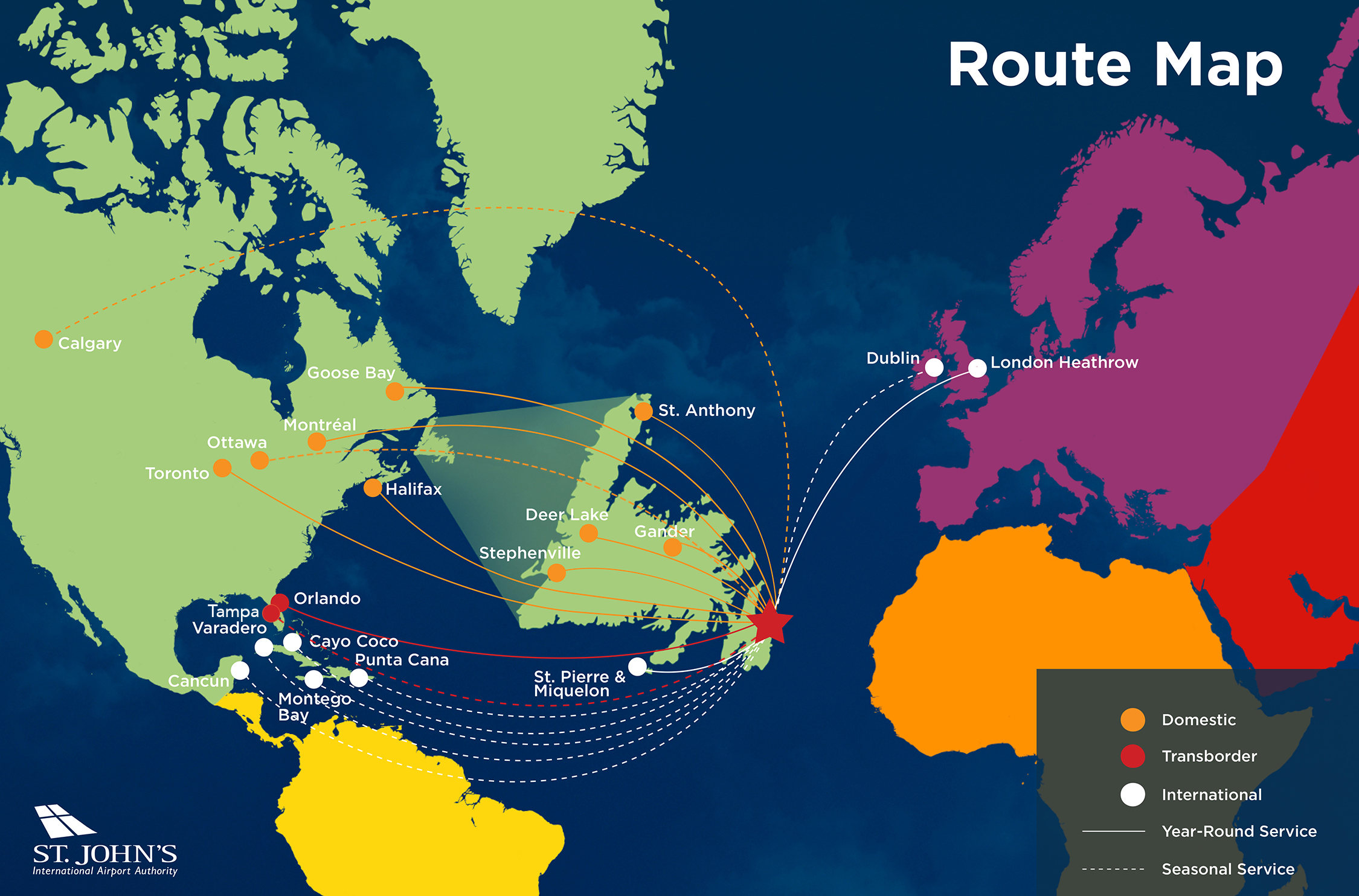
I was inspired by a conversation I had earlier this week. Actually I was inspired by many conversations this week. A really great week all around. One of the great conversations was about the size of the St. John's NL business marketplace as it is associated with what is within reach by a single hop flight. Well... I consider the St. John's population to be over 40 million and includes two of the largest business cities on the planet (London & New York).

http://stjohnsairport.com/wp-content/uploads/2018/01/SJIAA-Route-Map-Jan-2018-edit.jpg
So when looking at the direct flights available from St. John's and consider the cumulative population of these cities [ London (12.6 million), New York (19.1 million), Toronto (6.4 million), Montreal (3.8 million) ] and their collective global financial influence, the market for St. John's is massive and with solid financial footings.

If you are growing a business or thinking about starting a business in St. John's (or any city within single hop flight of your own city) the market is a lot bigger than you think. So maybe shift how you perceive your market, reach out across your cities direct flights, consider what is at the other end, and book some flights. Use the global communications network to your advantage, visit each of these cities on a regular basis, budget for it in your business planning. Given the St. John's mid-Atlantic location, the future is indeed bright!

Managed Endorsements

I'm approaching my 10th anniversary on LinkedIn and I have found it a magnificent record of my professional life. The fact that it is published to the web is a positive side benefit. Surprisingly (or maybe not), I use it as my system of record for my professional life. When I enter into situation that may require a resume, the first thing I do is I make sure my LinkedIn profile is up to date. And I make updates to my resume reconciled against my LinkedIn profile. It is the easiest and best organized place to keep my professional profile information.


So when a past associate from Mozilla pointed to the year old blog post about "empty endorsements" I started reflecting about how I disagree with this. Don't get me wrong, I have the utmost respect of the work done by Erin and Alex. And the world is a whole lot better place because they are in it. As we move further into our digital, connected, and social media lives... the idea of online or digital endorsement becomes increasingly important. And staying connected with people is our connected knowledge (*we store our knowledge in our friends*); and really over a life well lived we don't know when things will come full circle. So staying connected to people in multiple ways, and acknowledging (or endorsing) a persons skills or knowledge you are familiar is the right thing to do. I do know I recently endorsed Erin for her leadership skills. I didn't do this lightly, I was mindful when I did it. I spoke with Erin a number of times during my time with Mozilla and I observed how she led a group, she is a good leader. So when I was prompted by LinkedIn (an option she has chosen to use) on a skill she has included with her profile, I thought about it and made the endorsement. From my experience, I will always consider Erin a good leader. If Erin (or anyone) truly believes LinkedIn endorsements are empty, I will politely suggest they turn off the ability to be endorsed.


From my perspective my LinkedIn endorsements are not empty, either given or received. They could be if I wasn't mindful when I gave an endorsement, or didn't consider which endorsements I displayed. (I regularly prune / update my online profiles). I believe in social media and paying it forward. I believe our personal reputations are an accumulation of all our contributions, recommendations, endorsements, badges, interactions, etc... across all the locations we participate and contribute online (and more importantly, offline).

Monday, September 16, 2013

Shepparding multi-stakeholder architectural decisions

What fun. I recently moved with my Family from an island off the west coast of Canada to as far east as you can get in North America; St. John's, Newfoundland. One of the benefits of this is I can become more involved in the technology community. My previous island life made it prohibitive to participate in social and technology events in the city. Now that I can participate, I will.

St. John's has a number of technology conferences (or events) in the fall. And one of these is aligned with the bsides security conference. I decided to participate by proposing a lightning talk, fortunately my talk was selected... what fun. The title and abstract of my talk is as follows; and will allow me to discuss my experience with shepparding multi-stakeholder architectural decisions to agreement.

Title: Defence in Depth: Approaches and Importance of Enterprise Architecture Security Decisions
Abstract: In this lightning talk we will explore one approach to getting multi-stakeholder agreement on Enterprise Architecture decisions focused on a defence in depth security model. Corporate enterprise technology environments can be large and complicated. And when it comes to making changes to the internet facing security environment both rigorousness and resistance to change increase. These increased challenges can be overcome with good project / process management, solid end-to-end architecture, and a comprehensive decision making template. In a nutshell, this talk explores the enterprise architecture decision.

Defence in depth is an age old practice.

Fortunately, over the last 15 years many of the projects I have worked on were internet facing and had security and privacy issues baked into the project. The bigger the project the more technical stakeholders were involved in designing, building and deploying the solution(s). utilizing all these technical people can make for a stronger and more comprehensive and well engineered solution. Coming to agreement across all the stakeholders can be difficult, for they sometimes have opposing tasks and responsibilities that are counter to another. With good process and a strong engineering mindset it is possible to find the common ground and build a solution where all stakeholders technical constraints can be met. This talk explores this process in the context of altering an existing network infrastructure and related governance groups to deepen defence in depth approaches to enterprise security.


Tuesday, July 23, 2013

The Self-Determined Learner

Most of what I do is toward deepening my abilities as a self-determined learner. I believe any adult learner can develop their own curriculum, attach accreditation to this curriculum and work towards the tasks and learning to fulfill the curriculum and earn the credentials. I believe we need to teach people to teach themselves, and these abilities should enter the education system at age fourteen (or grade 10). I believe these skills and knowledge can and do enter the education system earlier. The one big challenge is that teaching people to teach themselves is a big change from our current social order around education.

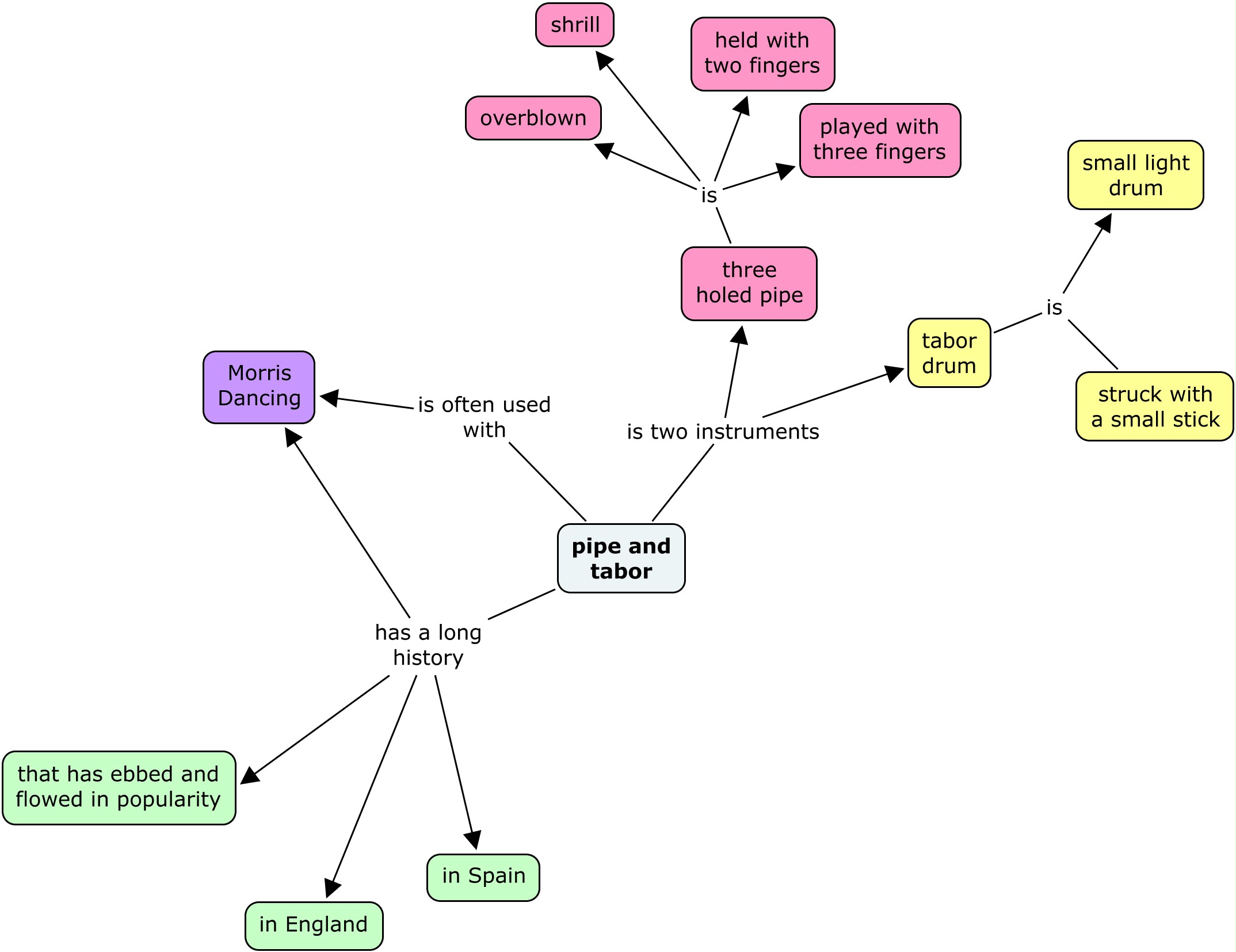
An example concept map: Learning to play the pipe and tabor.
My approach to self-determined learning has a number of basic steps
  1. Identify and commit to learning a subject domain
    And all this can start with a single word or picture written in the middle of a page. And all you have to do is start reading, researching, playing with and discussing this concept and move into step 2.
  2. Begin a creative project or concept map about the subject domain
    This where it becomes even fun, begin a creative project of some kind around the word or concept. As you learn more about your chosen subject domain through your research, reading, play and discussion, add to your creative project.
  3. Research (in detail) items or themes within the subject domain
    Identify words, concepts and themes that can be researched. Choose the ones that excite you the most, research these in detail. Invest considerable time and effort in this research.
  4. Add to your creative project or concept map as your understanding deepens
    Update your existing creative works, continue to build the concept maps and creative works. Write about your research (reflect upon all that you have done), create, publish, do your work in the open.
  5. Seek out peers and experts within your subject domain, engage these people
    Engage your learning community. Invest time in seeking out the communities of learning (both online and off), consider building your own community if ones don't exist. Seek mentorship, become a mentor.
  6. Build and utilize a personal learning ecology
    The personal learning ecology consists of the people and learning objects within reach. Connected learning works best when it is blended with learning and resources that can be found within close proximity (online , virtual and otherwise). Create and nurture your personal learning ecology.
  7. Build a personal curriculum map of how the subject would best be learned
    The personal curriculum map provides the map and learning pathways for your personalized learning journey. It is taking your concept map or creative work and identifying learning pathways and fitting them all into a personalized curriculum. This development of a personalized curriculum is an amazing way to deepen your understanding of your chosen subject.
  8. Reconcile and align your personal curriculum map with other existing curriculum
    To further deepen your understanding of your chosen subject domain try reconciling and aligning your personalized curriculum map with other related curriculum (institutional or otherwise). Other curriculum may not exactly match your personal curriculum map or your subject domain may not fall into a realm where curriculum has never been developed. This should keep you from trying an
  9. Create learning plans for items within your identified personal curriculum
    Choose items from within your personal curriculum to build learning plans. Always choose the item or items that interest you the most. Items may come in clusters, or they may stand alone. Create learning plans which describe the details and scope of the learning, make it all up if you have to, confirm it with existing learning plans. Include a schedule for your learning, make a commitment, put all this in your learning plan. If you are wondering how to create a learning plan, there are many references on the internet to help. You may even find that creating your own learning approach and related learning plan works best for you. This is how you will develop skills and approaches for how you learn best. You may even consider developing your own learning methodology, one that works best for you.
  10. Create badge systems that align with learning plans and the curriculum
    Once you have your first learning plan, be sure you have identified the learning objectives you are wanting to achieve with your learning. Be sure to describe identifiable criteria as on outcome of your learning. Publish your learning plans to the internet. Create an open badge for your learning and have the criteria linked to the badge. Invest some time in developing a badge system that is aligned with your personal curriculum.

    It may seem like a large investment of time and a lot of effort to create learning plans; The creation of these plans deepens your understanding of your chosen subject. This goes back to the idea; the best way to learn something is to have to teach it.

  11. Continuously engage your learning network, ask for feedback
    Whenever you create new learning plans or make updates to your concept map or create work, contact your learning network. Ask for feedback frequently and continuously. Be sure you have others review your learning plans and how they tie to your personal curriculum. Get feedback on your badge or badge system.
  12. Assist and provide feedback to others within the subject domain
    Practice reciprocity, engage your learning community by assisting others on their learning journeys. The more you help other who are learning similar subjects as yourself, the more you will learn about your own subject, the more you will get help.
  13. Complete learning tasks from your learning plans, earn badges
    Focus your efforts, keep to your schedule, complete tasks within your learning plans. Be sure to publish all the evidence you have in completing tasks. This evidence may come as short videos, published papers, songs, photographs, etc. Just do all you can to provide evidence of what you have done. Create blog posts about your learning and the steps you took to complete a task. Once you have gather together all your evidence of a completed task, added information about your learning journey, and summarized it all with a blog post; award yourself the related badge, or have another in your learning community award you the badge. Complete learning tasks and earn badges.
  14. Return to step 1. recommit to the subject domain, iterate. The completeness of your work will come through time and the learning will deepen and become more extensive with each iteration. Keep working on developing your learning, don't allow yourself to see this work as too much or have you stop because of effort. Small steps of progress and small iterations of learning are also very powerful through time. Life-long learning takes a life-time!
Note: an important part of this learning approach is to do it in the open. Being public and open helps others, increases the quality of your work, and deepens your own understanding.

Wednesday, July 10, 2013

Agile Learner Design

My focus on an Agile Learner Design methodology for creating and determining your own curriculum got a renewed focus over the past 18 months. It all started with my last post of 2011 where I revisited and summarized Agile Instructional Design. I have come to the conclusion that what I am doing isn't focused on instruction, but upon the self-directed learner. Therefore, what I am doing is developing an Agile Learner Design methodology, not an Agile Instructional Design methodology. An important distinction in the fundamental focus of the methodology. To build upon my last post of 2011 I kicked off the year by looking at some of the existing research and approaches to self-directed learning. And looked at some of the approaches that I would consider similar to ALD. I also considered some of the people and approaches within my inspired learner series of posts, because it is these inspired learners that drive me to further develop ALD. Listed below is a summary of Agile Learner Design implemented.

The Agile Learner Design (ALD) Methodology
ALD Reference Materials
ALD Examples and Inspirations

Friday, June 07, 2013

Does a badge stand on it's own?

This post sets out to describe what I believe are the strengths and weaknesses of one row from within the Badge System Design Rubric found within the P2Pu challenge of the same name. The row I have chosen to evaluate is dedicated to a badge systems criteria.

What is badge criteria: Each badge stands on its own, or is it a part of a larger learning, achievement or recognition journey. The objective is well represented in the badge or collective badge system criteria. The criteria provides flexibility so a badge can be reused in different learning, achievement or recognition contexts. The badge criteria accommodates for its potential expiration.
I believe an individual badge or badge system should be able to stand on its own. This is so it can be used across contexts. This strengthens the design of the badge and sets the badge or badge system for greater reuse. The criteria of the badge system needs to be well articulated and easily understood so people quickly know what they are working toward. I believe the badge criteria should be written in such a way that it is timeless or recognizes its expiration. If a badge does expire it should still accommodate for its assertion (validation).
Introductory badge criteria: The criteria to earn the badge is well articulated and easily understood. Criteria attribute within badge meta-data resolves to URL.
These are simple criteria to meet, and as an introductory badge gets someone to completing the design quickly. What is the outcome for earning the badge, well written and easy to understand, with a working URL. What else do you need to get started?

Working badge criteria: The criteria to earn the badge is comprehensive in that it describes different learning, achievement or recognition approaches, associated tasks and outcomes. The criteria has one or more examples or completions for reference.
The working criteria looks to be complete and has accommodated for different approaches to achievement, assessment or learning. The working criteria doesn't restrain the approaches used to create evidence toward earning the badge. Examples of how the badge was earned are easily found and understood.

Notable badge criteria: The criteria allows the badge to stand on its own, fit within the system it has been developed, and can be used within other badge systems. Criteria seems timeless in that it is constructed and worded in such a way that it does not expire. 
I like that the badge can also be used in other learning contexts and within other badge systems. One of the benefits of badges is to also reduce the duplication of accreditation for the same subjects. The design and wording of the badge should be timeless, I believe this would cause the badge to be more transferable and work well in other badge systems. This does not mean that a badge cannot expire, it just means criteria should be designed and written without an expiry type vocabulary.
Exemplary badge criteria: The criteria fits well within multiple learning, achievement or recognition contexts and applies well across communities, events, curriculum and cultures. The learning context may change and the criteria still applies. The criteria is developed and written in such a way that it is timeless; earning the badge more than once through time makes sense. The badge criteria does not expire.
If a badge or badge system could be used across contexts (in particular, across cultural contexts) and meet or exceed the previous three performance levels it should be considered exemplary.  The badge criteria should not expire. Unless, it makes sense for a badge to expire; or have a renewal cycle where skills, knowledge, learnings, and/or attendance needs to occur through time.
Strength: I believe the main strength of this criteria is in describing a badge or badge system that stands on its own. I believe it is important that any badge can be used across contexts and become a part of another badge system.

Opportunity: I believe there is an opportunity to improve the description (with working examples) of how a badge or badge system can be used across contexts. I also believe that there are times where a badge should not be used across contexts and it would dilute the badge to design it so it could be used across contexts.

Friday, May 10, 2013

WANTED: OnPhD Mentorship

What would provide you incentive to mentor someone (me) through to a PhD level of knowing a subject domain?

The commitment would be small and I would guide the process. Every four months I would provide a 15 minute video update with a collection of readings and other media for you to evaluate if you had the time or inclination. The subjects would be focused on educational technology, self-directed learning, and solutions architecture. If you had an interested in any of these subject domains I would be happy to deepen my knowledge by researching a subject for you.

So, what incentive would you require to share your knowledge and provide me assistance?

What is an Open and Networked PhD (OnPhD)?
I consider an OnPhD to be a self-directed exploration into a domain of knowledge. The mastery of the knowledge domain would be to a PhD level of knowing. The learning journey would be done completely in the open (for free) and would utilize a persons social and learning network (both online and off).

Thursday, April 25, 2013

100 thousand pageviews

It took me almost 10 years of blogging and almost 400 blog posts to reach 100,000 pageviews. Thank-you for all the inspiration, support and readership!


Saturday, March 09, 2013

Book Review: Buccaneer Scholar

This book hit a home run for me in many ways;
  1. it chose a buccaneer (sailing) theme
  2. it told a good story with good imagery
  3. it challenged the status quo in education with personal evidence
  4. it provided a map to the self-directed learner
  5. it recognized the importance of organizing your learning goals
  6. it offers the adult learner an alternative
  7. it shows a life can be great, with amazing achievements, without a formal education
  8. it is inspiring to think what James has achieved through self-education
What Buccaneer Scholar did best is got to the root of it all by driving home the point that scholarship is about learning, personal learning. True scholarship is not about the certificates and institutional recognition but about learning new things, deepening your own knowledge, and being able to take on new challenges due to your ability to learn, with little or no guidance. In the end learning is about personal fulfilment, personal commitment, finding a satisfactory way to make a living, and honouring your life's journey!

Thanks James!

Wednesday, February 27, 2013

OnPhD: Detail your contribution

This is the blog post describing completion of the third task of the OnPhD candidacy challenge. In this post I detail what I am going to do as my contribution to furthering human knowledge.

My contribution will fall within the intersection of education technology, systems architecture and heutagogy. My current thinking toward this area of focus will be to create a badge clustering portal that will allow people to gather and create badges from the different non-obi compliant badges systems. The benefit of this would be to support my thesis that we need a way of collecting together peoples learning to provide validation and recognition. My working thesis is;
The ability to validate and cluster all the events of life-long learning, regardless of their origin, will provide the required alternative to emancipate the self-directed learner from the limits of traditional accreditation. This shift will enable every learner, regardless of approach, to pursue learning with the same level of recognition as learners in traditional institutions.
  1. Detail your ideas around a significant contribution. (remember this can be altered as your knowledge of the domain of study deepens, it is an iterative process)
    Build a web portal, with support for mobile devices, which allows a user to consolidate there badges from many non-obi compliant badge systems.
    • The technology platform will utilize a MVC approach using HTML5, CSS3, PhP and MondoDB. Rationalization of this technology stack will be in a follow-up blog post.
    • Solution architecture will be focused around open platforms and standards. A strong service orientation using RESTful type approaches for integration.
    • Features will always look toward assisting the self-directed learner in consolidating thier accreditations.
  2. How are you going to publish?
    I will publish frequently on my blog with papers written for major project milestones and upon completion of significant design elements. I will publish in two primary locations; first, utilize online open journals and second, pubish on wikiversity.
  3. Where will you engage your network of peers and mentors?
    Online! I will communicate regularly with my peers and mentors, both directly and via online communities. I will seek feedback with all my regular blog posts and provide more formal engagement processes with all major publishing events. If engagement requires discussion I will ask to publish the video or audio chat. I will be very transparent through all my engagements. Peers and mentors will be aware of this before they are asked to engage.
  4. How is your work going to be peer reviewed?
    Peer review will come via my publishing in the open, my regular and frequent engagements, and through blind peer review via the journals I utilize to publish my major works.
  5. How are your findings and data going to be published in the open?
    All documents and data will be published in the open. People can request complete data sets and open API's will be made available. Note: privacy policies will be put in place regarding participant data.
  6. Describe how you know you are finished.
    When users badge clusters are successfully rendered and shared from their user page within the web portal.

Tuesday, February 26, 2013

OnPhD: Identify your domain of study

This is the blog post describing completion of the second task of the OnPhD candidacy challenge. In this post I describe my domain of study and provide a potential PhD thesis statement.

This sentence and slide stack (with audio) should answer questions 1 thru 6.
My domain of study is the union and intersection of the educational technologist, the solution architect and the self-directed adult learner (heutagogue). The intersection of these three topics encourages the study of personal learning ecologies, the technology stack and distributed computing that supports personal learning, and the devices and user experience that best suits the self-directed learner.


These two sentences provide a potential PhD thesis statement.
The ability to validate and cluster all the events of life-long learning, regardless of their origin, will provide the required alternative to emancipate the self-directed learner from the limits of traditional accreditation. This shift will enable every learner, regardless of approach, to pursue learning with the same level of recognition as learners in traditional institutions.

To do: The completion of this task exposed a gap in my knowledge. I need to do a bunch of research on Heutagogy. From this reseach I will build another concept map, but this work will become a part of my OnPhD.

Course Design Sprint

Outstanding!!! Early last year I wrote a post playing with the idea of a course design sprint. The main idea being the development of a full online course in a reduced amount of time. less than five days, or some low number of days like that. In my post I dreamt of having the time to execute on the idea to see if it would work.
Agile Instructional Design Sprint
Well it turns out my friend Billy Meinke ran a course sprint this past weekend.  The course was developed as a launch course for the School of Open during Open Education Week (Mar 11-15). I really don't want to take the wind out of their sails... so you can read about all there great work yourself. I'm just so flipped out they proved this idea out! Kudos to everyone involved, particularly Billy!


Monday, February 25, 2013

The Solution Architect

This concept map is a compliment to the previously posted "Educational Technologist" post. These two concept maps together provide the visuals for my identified domain of study as I work through the P2Pu challenge to declare my OnPhD candidacy. This concept map contains the two related concepts of Solution Architect and Information Technology (IT) Architect. Many of the skills and knowledge for the solution architect are a part of the overarching role of IT Architect. It is my intention to seek a research domain that occurs within the intersection of Education Technologist and Solution Architect. I believe bringing greater architectural discipline to the educational technologist role will assist greatly in growing this important role within the rapidly innovating educational space.

Tuesday, February 19, 2013

Peter Rawsthorne's Career Narrative

Family on Quiniscoe Summit, 2551 m
I really do love to build and integrate software solutions, particularly internet solutions. And the more information sources and distribution, the better. I am truly invigorated when building solutions that take the complexity of a well thought out business strategy and create kicking customer facing internet portals. I also get jazzed when the solution directly supports the business' back-end processes so the business can be smarter and more nimble. If there is uncertainty around strategy due to the project being a start-up idea (or wild-ass dream), I can proceed with experience using agile and lean approaches. I can create a project heartbeat where we ship regularly with focus on customer need and successes. This is all fun for me, and if all this falls within the knowledge management or adult education domain, all the better.

Over the last 23 years I have occupied almost every role within the development of information technology software and internet solutions; I've worked as a programmer, a database administrator and solutions architect, through to manager of information technology. I have been successful in large organizations, in small internet start-ups, and many organizations in between. I feel it is a great accomplishment that I can bring projects to completion regardless of when I join the project and within any technical or leadership capacity. I believe it is important to finish the things we start.

I am excited about opportunities with medium sized organizations and consulting firms who are looking to innovate their business through information and internet technology or assist others in improving their business through technology innovation. My experience and education would have me in the role of senior solutions architect, consultant, or director of information technology.

If you have an interest in working together please do not hesitate to contact me; peter AT rawsthorne DOT org.

If you want to view my career history my linked in profile is a great place to start; http://www.linkedin.com/in/prawsthorne

Sunday, January 27, 2013

Responsibilities of Institutions

Over the last few days there has been a bunch of work taking place to describe the rights and principles of network learners. The original document was drafted by an amazing group of people, for whom I have a great deal of respect. I also have a great deal of respect for everyone who commented on and contributed to the rights and principles of networked learners. The one disappointment I have with this document is that it was written by this amazing group from the perspective of the learner (or student), and didn't focus more on the responsibilities of the institution. Don't get me wrong, I think this is an amazing piece of work and I am very happy it has been started. Given the influence this group would have, it would be great if they would also write the responsibilities of institutions and then advocated for them to be adopted by the institutions for which they work or are affiliated. If we were to have this activity from both the learner and institutional perspectives, then we would really have something!