Thursday, August 04, 2011

Mobile devices and good architecture

I'm in the midst of a project that includes a significant mobile device component. The build out requires super engaging user experience (UX) for the interactions on the mobile devices. The project also includes a companion web portal where people will have further insight into their mobile device interactions. The project is very social and has a good possibility in innovating some monetary processes. Very exciting!

The other day I attended a meetup with focus on sproutcore. Great introduction to the product with some very useful insight into how the framework was put together and how it should be utilized. What was cool about the whole meetup is I posted a photo from the AppNovation offices where the event was being hosted. I posted directly from my Android phone to Google+ with no effort (nice feature) and added a comment. The really cool part was the discussion that occurred between myself and two guys I worked with on a really innovative client-server C++ / Sybase SQL Server application 20 years back. Weird thing is we are all still coding in different capacities. Anyhow, the really interesting conversation was around the MVC pattern and business logic in the browser. We all agreed this was not the right way to go, and the sproutcore site was wrong in promoting business logic in the browser as a marketing message.


So why isn't business logic in the browser a good architecture?
Because pushing it out to the browser means it can no longer run on the server. Business logic can be reused for other services (think RESTful) where browsers are consumers of the logic (not the producers), business logic is intellectual property and shouldn't always be exposed in the browser, business logic often needs data and implements business decisions, this should stay on the server. Don't get me wrong a framework that supports HTML5 and implements the MVC pattern is a good architecture. Just pushing the business logic out to the browser is not good architecture. Now we may be getting into the definition of business logic, and if the Model within the MVC is considered the business logic and is only responsible for acting as a proxy for the data and business decisions through a web service API like REST then we are good.


So what does this have to do with mobile devices and good architecture?
HTML5 and the MVC pattern are very good practices when developing on mobile devices. This is mostly because of HTML5's ability to target multiple devices and the MVC being a very mature and proven pattern. The issue then becomes how should the application be architected? I'd suggest the following practices;
  1. Use a HTML5 / MVC approach when building the User eXperience (UX)
  2. Keep the Model thin and it should act mostly as a proxy to the server hosted web services
  3. Build the server hosted services using a well thought out RESTful design, ensure these services could also be consumed by non-mobile devices
  4. Be mindful of which features are required for mobile and which are better implemented within a browser based portal (consider the difference between the Google+ mobile app and the Google+ browser portal)
  5. Separate the database reads from the writes within the RESTful API (this will greatly help scalability)

Practices for IT stewardship

I completely agree! Information Technologies role is shifting into stewardship away from control. There are many forces at play that are leading to this end and this linked article does a good job of identifying these forces. As the article points out, much of the change will be a gradual cultural change and there are many practices that can encourage the change. This is what I see as important to facilitate the change from an IT perspective;

  1. Define IT stewardship - doing IT right the first time
  2. Every organization needs to create a shared understanding of IT Stewardship. I agree with the Merriam-Webster definition of Stewardship.
    the conducting, supervising, or managing of something; especially : the careful and responsible management of something entrusted to one's care
    It's the idea of being entrusted, responsible and careful with IT so it supports and empowers all those who use it. It's how IT professionals get out of the way and facilitate the organizations innovation so it doesn't have to look elsewhere. This also means doing the right thing the first time, instead of compromising the future with a quick fix or half-baked approach. Most seasoned IT professionals know the right answer when selecting and proposing approaches, they need to trust themselves and gain the trust of others.
  3. Empower the middle tier - they should be interpreting and contributing to the strategic planning, writing the business cases and executing on plans, discussing with front line staff all customer issues, working diligently to make senior executives irrelevant or at least let them know there is a solid group of up and comers!
  4. Encourage the front line staff - they know the heartbeat of the organization from the customers perspective, this is every organizations most important resource.
  5. Engage your customers - all you design should be done with the assistance of your customers

Tuesday, July 12, 2011

That's a good bet

Just viewed this in my LinkedIn and couldn't help but smile... so the originator thought they would win the bet for a few hundred dollars; well it turns out, with the wonder of social media, it has turned it into a few thousand. And it wouldn't surprise me if it pays off his mortgage by the time its all done. I'd hedge its about to go viral. I certainly hope we get a follow-up post to see how the bet was actually paid off...


And in the time it has taken me to compose this post the number of likes has gone from 5,908 to 6,186... When will people realize the real value of social media is making bets with your Luddite friends in social media's power as a communication and networking tool.

Wednesday, July 06, 2011

Federated & Faceted Search

In the last few months CLEBC has shipped a new search engine. The upgrades have been significant and these improvements include;
  • performance and currency has been greatly improved - search results occur quickly and the indexes are updated within 12 hrs of new content being added to any information silo.
  • navigation made more intuitive - navigational facets provide standard approaches that are currently being used for search and faceted search.
  • alignment of taxonomies across all information silos - the top level taxonomy has been reconciled across all information silos for better browsing of results across silos.
  • search applied across all silos including the CLEBC store and CanLii - search results include references across all silos with the inclusion of the CLEBC store (to include the coming learning events) and CanLii to include broader results.
  • ability to both search and discover (with the ability to narrow the search criteria within both of these approaches) - the use of faceted search is powerful when it provides the ability to both directly inquire and discover information.

All these new search features are due to using both a federated and faceted search approach. The rest of this post describes these two concepts as they relate to search and why they are important to legal search.

Federated Search
Federated search spans multiple data sources, where the search indexes include results from these many different, and related, information sources. CLEBC already has many high quality content sources and many of these sources are related through practice areas, taxonomies and other common and legal attributes. The design process of this federated search included analysis of each information source and reconciled the common attributes to provide a unified search result across all sources. The result of this federation is to have results from all information silos appears as one result set.

The effectiveness of federated search lies in how single search terms can span multiple information sources and how the results can be organized by date, relevance and information source. Finding related and relevant results across information silos covers more contexts a provides greater insight from different perspectives.

Faceted Search
Faceted search is best understood in a comparison of discovery based searching vs. direct searching. This is the difference between "I'd like to find a beach resort in the British Virgin Islands" (discovery) and "I'd like the contact information for the Long Bay resort in the British Virgin Islands" (direct). With direct searching you know exactly what you want you just need further details; with discovery searching you don't really know what you want and like to browse to find it. A search facet provides this discovery. As  show with the image on the right there are two facets, one for Content Type and the other for Practice Area. As you search for a general (or more specific term) the contents of the facet changes also with the number of results within each term to the right of the faceted list. This allows discovery where you can drill down on terms until you find specifically what you want... discovery based searching.

Special Thanks
Many great projects happen in the open and with many peoples contribution. In this project I would like the thank Susan Munro, Laura Selby and all of CLEBC who provided guidance and insight in how legal search could be improved. I'd also like to thank LexUM for their expertise in building faceted and federated search.

This search patterns book from O'Reilly is an essential read from understanding search. One of the authors, Peter Morville, has put together an excellent collection of flickr images showing the different search patterns.

Friday, June 24, 2011

The nature of the work

I recently posted more of my thoughts regarding the independent / self-directed learner and their use of fair-dealing when utilizing educational resources, copyrighted or otherwise. In that post I spoke to the six-factors to consider with fair-dealing. One of these factors, "the nature of the work" is where my claim to use all materials with reckless abandon falls down...  
Particularly, when the nature of the work has been created for the independent / self-directed learner?

So what kind of resources do I believe fall into the category of "created for the independent / self-directed learner"?
  • Resources created specifically for professional development. Mostly, these resources are created for the independent / self-directed learner. And the nature of the work is servicing this groups learning needs while making a few dollars (not-for-profit and otherwise).
  • Sample exams and testing resources; (GMAT, LSAT, Certification Exams, Etc). All these exams and testing resources are, in general, created for the individual in preparation for exams / tests.
  • All self-help books (Spiritual, Physical, Emotional, Intellectual, Other). Go get the book from the library, or buy it if you are using most of it. If your going to copy or publish a paragraph or section into your blog or some other social media, be sure to provide attribution. Otherwise, we are back to private study... remember, the dealing needs to be fair.
  • I'm sure their are others... I'll list them here when I think of them or others comment with their suggestions.
So there you have it. My exception to learning with reckless abandon and claiming fair-dealing. If you are using a resources as an independent / self-directed learner and the resource was created for the independent / self-directed learner I'd suggest you consider honoring the copyright. Then of course, if you copy a paragraph or two, or an image from these resources and put them on your blog, provide some review or your thoughts  from a learning perspective were back to private study. Always remember to link back to the resource and give attribution. Obviously, there comes a point where it all becomes a little grey... that is why we need some case law on an independent / self-directed learner claiming fair-dealing when using copyrighted materials.

Monday, June 20, 2011

User Stories and Role Modeling

Accurately and broadly describing the user community and their immediate needs is a great way to get the first iteration of web based project started. I'm back to the early stages of a potentially large project. I say potentially cause its a start-up and you never know where these things go until its gained some traction by capturing some peoples imagination and traffic begins to build. I've been building interactive web applications since the late 90's and this is cumulatively what I believe are the essential ingredients to get started and why.

User Stories
Telling stories assist greatly in sharing knowledge and building understanding. Gathering user stories when working within an agile approach to software development is a great tool for focusing on the next build and the features it includes. Scott Ambler does a great job of describing the user story. What I find most important with the user story is the confirmations that also occur when writing the story.
Why user stories?
Humans brains are mapped to understand stories and having a shared understanding among designers, developers and users is really important in getting it right. A big benefit to having a comprehensive set of user stories (with confirmations) is they drive testing.
References:
http://www.google.com/search?q=storytelling+knowledge+agile
http://en.wikipedia.org/wiki/User_story
http://www.agilemodeling.com/artifacts/userStory.htm
http://www.agilemodeling.com/artifacts/userStory.htm#Detailing

User Roles
Understanding the broad range of users at the early stages of designing software is important. Brainstorming the breadth of users is helpful when determining the scope of a project as it often exposes features that are derived or afterthoughts. The idea of the administrative role or the stewardship role are often overlooked when focus is on the first, usually customer focused, release.
Why user roles?
Being able to tell stories from many different perspectives, all within each iteration of new features, creates a focused and working solution within each iteration. Having a broad set of user roles identified keeps the design comprehensive and the features current.
References:
http://www.foruse.com/articles/rolespersonas.pdf
http://technologyforcommunities.com/2010/07/tech-steward-meet-tech-mentor/

Wireframes
Wireframes takes the design discussion beyond the user stories and roles and puts design to "paper". Wireframes are very basic diagrams detailing the screen elements without the focus being on graphic design and aesthetics of the site. Its focus is on the features, navigation and organization of features.
Why wireframes?
It allows people to discuss the main features and how they will be implemented and clustered without to large an investment toward the actual interface design. The discussion is more focused on how it will all work and how features are grouped.
References:
http://en.wikipedia.org/wiki/Website_wireframe
http://www.google.ca/search?tbm=isch&hl=en&source=hp&biw=1440&bih=663&q=wireframe+examples 

Lots of discussion
Discussing the user stories, roles and wireframes greatly increases the likelihood of creating a shared understanding of the features and the application as a whole. As far as I know the Vulcan mind meld is only possible when in a star trek episode. So having discussion with users, stakeholders, programmers, designers, architects, etc. is beneficial to the overall success of the project. Determining the right mix of people for these discussions depends on the project and the organization. Always better to have the groups small and focused.

Suggested Reading
User Stories Applied
From all my reading on the user story and user role, this is the book to read if you want more detail than is described in this post.

Tuesday, June 14, 2011

Fair-Dealing Case Law

Many of my recent posts have touched upon copyright as it relates to the self-directed learner and their use of copyrighted materials as educational resources. I believe this is an important issue for the adult learner. Therefore, I continue to look for case law related to this important issue in adult education. To date I have found no case law which includes an independent / self-directed learner using copyright materials for their private study. I believe it is important to define what I mean by independent / self-directed learner. An independent / self-directed learner is a person who is using any and all resources (copyrighted or otherwise) available to them while learning outside of any formal education program or institution. The independent / self-directed learner chooses subjects that interest them. They explore and learn all they can in the subject using all available resources (regardless of source). This independent / self-directed learning is also supported by the pedagogical practices of writing, reflection and discussion; therefore, leading to the use of the internet as a public publishing platform which also deepens the individuals learning. All of what the independent / self-directed learner does should be considered research and private study.

Recently, I was re-reading an article written by Michael Geist speaking to the issues around Bill C-32. It gets close to discussing the issue of fair-dealing as it relates to the individuals use of copyright materials. I say close cause it doesn't speak of an individual but of students within educational institutions. This is as close to case law on the independent / self-directed learner within fair-dealing I can find. What stood out for me within the Geist post and embedded ruling were three main themes;

First theme:
The two part test; where first, the dealing needs to fall into one of the following categories to be considered fair;
  • research;
  • private study;
  • criticism;
  • review; or
  • news reporting
I believe an independent / self-directed learner is engaged in research and private study, even review. This then takes us to the second part of the test, where the dealing is considered for its fairness via the following six factors, this is how I see these six apply to the independent / self-directed learner;
  • the purpose of the dealing;
  • its private study; not hard to convince a judge, if what you are doing is genuinely research and private study.
  • the character of the dealing;
  • its personal-improvement, professional development, self-directed learning done under your own initiative; again, not hard to convince a judge, if what you are doing is genuinely research and private study.
  • the amount of the dealing;
  • you will only ever be copying any resource once, maybe twice. Your not copying for your own profit but your personal learning; again, its research and private study.
  • alternatives to the dealing;
  • there will be alternatives, but as an independent learner you want to read, listen to, watch as many resources on the subject to deepen your understanding; again, its research and private study.
  • the nature of the work; and
  • If the resource was specifically created for and to be sold to the independent / self-directed learner, then it may be a good idea to pay for it rather than find another way to access it. So here is an exception... Wow. I didn't expect that. If the resource wasn't specifically created for the independent / self-directed learner then use it.
  • the effect of the dealing on the work.
  • I believe that your use of a resource and your public reference to the resource from within your private study will attract more people to the resource. In most situations this is good for the publisher of the resource.
Second theme:
The use of the table (found on page 10) describing how materials could be copied, and how all parties agreed that as long as the copying was within the first three approaches it should be considered fair-dealing. In my opinion, this is a significant endorsement for the independent / self-directed learner to use educational resources with reckless abandon as it falls within research and private study. I'd strongly suggest you reference the source when using these resources for your learning. Beyond that, go wild, learn with reckless abandon!


Third theme:
The distinction of education vs. private study was further clarified (on page 19). And fell in favor of the independent / self-directed learner;
The adjective "private" is intended to exclude from fair dealing the commercial use of copyright protected material that has no educational value. I fail to see how the word "private" should be equated with "non-commercial". "Private study" presumably means just that: study by oneself. If Parliament had wished to exclude only commercial exploitation it could have used words to the effect of "non-commercial" or "not for profit". A large and liberal interpretation means that the provisions are given a generous scope. It does not mean that the text of a statute should be given a meaning it cannot ordinarily bear. When students study material with their class as a whole, they engage not in "private" study but perhaps just "study".
This document contains much more description of "private study", and in my opinion further supports the independent / self-directed learner. As this federal court of appeal points out, it depends on the facts of each case. Therefore, we need more fair-dealing rulings, particularly with the independent / self-directed learner.

Thursday, June 09, 2011

MUSIC 101: Ableton Live and the Pipe and Tabor

So I've been reflecting upon my learning of the pipe and tabor and how it has stalled in its progress. Not that I have stopped learning how to play the instrument for I believe my approach toward its mastery is also a big part of my learning. I have learned a number of important lessons, its just the lessons do not have me actually playing the instrument, what I have learned about is my approach to learning the instrument.

My lessons learned are as follows;
  1. I need feedback. I need to also train my ear and it is difficult without any actual musical reference.
  2. For me, learning the instrument is also in learning the songs, their melody, and lyrics (if available).
  3. I need a quiet place to practice that won't disturb the family
My deliberate practice;
  1. Get the Ableton based studio working with the new MIDI keyboard so I can listen to the songs on the piano, then play them on the pipe.
  2. Be able to record my practice so I can listen, get feedback and train my ear. 
  3. Use Abletone in Live mode where I could listen and play along, while also recording.
  4. Iterate between playing the music on the piano and then playing it on the pipe.
Next Steps;
  1. Finish configuring Ableton Live 8 to work with the new Oxygen 25 MIDI keyboard
  2. Become proficient with Live 8 to record my sessions and listen live to my iterations between piano and pipe
  3. Memorize the lyrics to "Go enlist for a sailor"
Learning Outcome(s);
  1. I will be able to use a Digital Audio Workstation (Ableton) to record and playback the playing of a pipe and tabor while alternating this play with the MIDI keyboard.
  2. I will be able to sing "Go enlist for a sailor" in its entirety (this does not mean I will be able to sing it well)

Wednesday, June 08, 2011

My Deliberate Practice

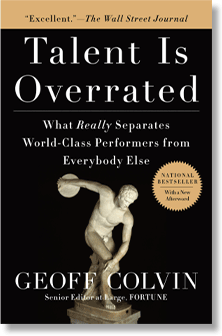
After my reading of "Talent is Overrated" I will be including a deliberate practice approach to my learning of the pipe and tabor. I will bring a more deliberate practice to much more of what I do. For the time being a deliberate practice will have me reflecting upon my learning where I focus upon what is holding me back. Until I have a foundation which to build upon I need to create my broad and stable base for my musical study. Keep in mind I should be considered a beginner musician. Many of my coming posts will be the writings about this deliberate reflection. My reflections will include;
  1. recent lessons learned - a candid review of my most recent learnings
  2. the actual practices - where I believe I need the most practice
  3. next steps, and - what I am going to do to facilitate the practice
  4. learning outcome(s) - the specific outcome(s) of my learning

Saturday, June 04, 2011

Book Review: Talent is Overrated

If you ever find yourself saying you can't do something because you don't have the talent... or you don't believe you could take your ability to the next level... read this book! This book does an excellent job of dispelling the myths around needing talent do become an exemplary performer. The main theme in the book is in exploring deliberate practice, and there have already been a number of good reviews of this 'talent is overrated' book and exploring / applying approaches of deliberate practice. So feel free to explore these for yourself.

Early in the reading of this book I enjoyed exploring the myth of talent and deepening my understanding of deliberate practice. My personal reflection fell into two themes, and what stood our for me was;
  1. As a parent, how I can encourage my children to strengthen their abilities for what they love. And how they can approach practice in an efficient and valuable way to increase their abilities.
  2. As a professional, how it is important to trust the expertise people have developed over the years and allow their multiple intelligences to emerge in the workplace by not getting in their way. I often find senior personnel getting in the way of peoples intelligences. A person who has over 10,000 hours of practice is going to intuitively know things that other are not. We need to trust this for ourselves and for others.
As I moved into the later chapters I began to understand how this book becomes a management consulting book focused on good leadership. The book deep dives into the value of deliberate practice in management training for organizations who want to remain leaders in their field. We have entered into a knowledge based economy where command and control based organizations will not survive; there is too much to know and no one individual can keep up. Staying competitive is a shared responsibility among all the employees and building great leaders and exemplary knowledge workers is key to this. As I read this section of the book it became painfully apparent that working for an organization that does not encourage leadership training and deliberate practice among its employees is a poor career decision for those who stay with such an organization. In the end each individual is responsible for their own skills and knowledge, having a deliberate practice around continued professional development is paramount for ongoing career success, working for organizations that overtly support this is important.

As the booked moved into its closing chapters it looked at how deliberate practice is also great for teams; in particular, how teams of individuals are different than teams of collectives. A group of individual top performers is often outperformed by a collective of people where the deliberate practice includes many team focused activities. As a technologist I was very attracted to the chapter describing deliberate practice and innovation. The book looked deeply into the eureka moment and how it rarely exists, most great innovation comes from years of hard work within a given subject area. Ideas are built upon one another and discoveries are often slowly baked to completion.

I believe this book will affect me for many years to come. It will impact the way I parent and how I encourage my children to pursue the things that interest them. It will change the way I practice and learn about the things I am interested, and having read the book I will never be able say I don't have the talent. When it comes to the workplace, and working in small teams, I will draw on this book as a reference in building a strong and healthy workplace with teams who have broad and focused abilities, and how those attributes can be encouraged. If you want a book to draw upon when taking on tasks that seem out of reach, this would be an excellent book to start.

Thursday, June 02, 2011

Personal Learning Ecology

I was prompted by a very interesting tweet the other day. Nancy White asked the question "What was the difference between a Personal Leaning Network (PLN) and a Personal Learning Ecology (PLE)". This question got me thinking and I have reflected upon it often in the last few days. One thing that jumped out from this reflection is to add the Personal Learning Environment to this question.
This is how I define these three related ideas;
  • Personal Learning Network is global and includes wherever your network reach extends, all resources are available (these resources can be; filtered or unfiltered, human, digital, printed, or otherwise). It is important to consider everything in your network that can contain or process knowledge and provide skills acquisition or understanding as a part of this network. Your PLN is very broad.
  • Personal Learning Ecology is more geographically related... the learning objects are what is available in the "local area" or within easy reach (digitally or otherwise). Items in the learning ecology are what come available as the learner goes through their day and are the items in which the learner has built their knowledge. These objects have the ability to be viewed through multiple intelligences and consumed using multiple tools. They are the things that are on the current learning path and not too far out in the persons network. What is in the ecology is a subset of your PLN and these items are very easily accessible through multiple modalities at the right time. Often it is the objects that are right in front of you during your learning that are most important, its the "when the student is ready the teacher will come" idea. And with PLEcologies the teacher can come in many forms. Depth and breadth is also important, therefore when the learning opportunity presents itself it needs to be explored in its entirety.
  • Personal Learning Environment is the full extent of the tools used to gather knowledge and deepen understanding. This PLE is more technology based and includes all your devices, approaches and collaborative technologies.
An example:
I have taken it upon myself to develop an expert understanding of the Morris dancing and related folk music tradition with focus on learning to play the pipe and tabor. I've committed myself to this journey and for me its about getting to mastery, not the rate in which I get to mastery. I purposefully put myself in positions to learn more. I have been documenting my process in learning the pipe and tabor and regularly seek out opportunities to deepen my understanding of Morris dancing and playing these traditional musical instruments. I have felt this is slowing due to not getting the correct mentorship and feedback as I try to learn, and not knowing what is my next step toward deliberate practice is difficult. I continue to read books on the subject and attend festivals and face-to-face workshops to learn more. Recently two things have occurred that I consider show the difference between a learning ecology and a learning network.
  1. A while back I was searching for books in these subject areas. My emerging learning network on this subject pointed me toward a couple of books which I have begun to read. One of the books describes when learning the pipe and tabor it is good to do this by ear, and it is a good idea to practice while sitting at a piano so you can listen correctly to the notes as playing on the piano then play them on the pipe. This back and forth between piano and pipe will greatly assist in learning the tones that occur when over-blowing the pipe. Training the ear is important to learning the pipe. Even though the book(s) came via my network, it is the presence of these books close at hand that put them into my ecology.
  2. I have also been focused on learning a jig called "I'll go and enlist for a sailor". Some of the steps were eluding me. Over this last weekend I attended the Marlboro Morris Ale and was fortunate enough to meet John Dexter, who could teach me the jig. I was shown the steps in detail by a master of the dance, much of the mystery of the steps were demonstrated, they are no longer a mystery. All my reading of the dance, watching videos had prepared me well for this master / apprentice type session. I was ready to learn and the correct situation presented itself as I was on my learning journey. The Morris Ale became a part of my learning ecology.
These are both examples of how what was right in front of me from within my PLEcology is what I needed best. How this is different from the PLN is that I focused my learning on what was directly in front of me as resources instead of searching my broader network. Most often it is important to hold the faith that the right learning is available at the right time.

    Wednesday, June 01, 2011

    Lyrics for I'll go and enlist for a sailor

    Oh list, oh list to me sorrowful lay,
    And attention give to me song, I pray,
    When you've heard it all you'll say
    That I'm an unfortunate tailor.

    For once I was happy as a bird in a tree,
    My Sarah was all in the world to me,
    Now I'm cut out by a son of the sea,
    And she's left me here to bewail her.

    Why did Sarah serve me so?
    No more will I stitch and no more will I sew;
    Me thimble and me needle to the winds I'll throw
    And I'll go and 'list for a sailor.

    Now me days were honey and me nights were the same,
    Till a man called Cobb from the ocean came
    With his long black beard and his muscular frame,
    A captain on board of a whaler.

    Well he spent his money both frank and free,
    With his tales of the land and his songs of the sea,
    And he stole me Sarah's heart from me,
    And blighted the hopes of a tailor.

    Well, once I was with her, when in came Cobb
    “Avast!” he cried, “you blubbery swab.
    If you don't knock off I'll scuttle your knob!”
    And Sarah smiled at the sailor.

    So now I'll cross the raging sea,
    For Sarah's proved untrue to me.
    Me heart's locked up and she's the key;
    What a very unfeeling gaoler.

    And so now, kind friends, I'll bid you adieu,
    No more me woes shall trouble you;
    I'll travel the country through and through,
    And go and 'list for a sailor.

    Transcribed by Reinhard Zierke and Garry Gillard
    http://www.informatik.uni-hamburg.de/~zierke/guvnor/songs/illgoandlistforasailor.html

    I'll go and enlist for a sailor


    One of the items that stood out for me while participating at the Marlboro Morris Ale was having John Dexter teach Joe and I the "I'll go and enlist for a sailor" jig. I have been wanting to learn this jig for six months now and have been watching video and preparing myself to play the tune on a pipe and tabor. I struggled with some of the basic steps of the jig and felt I needed some direct instruction; fortunately, John is an excellent teacher.

    I also found a number of good references to play this tune and found the sheet music.


    For instructional purposes I also found this video. Stay tuned as I take the dance apart, and video myself learning each piece... one day soon you may see me dance the whole jig.

    Tuesday, May 31, 2011

    Marlboro Morris Ale


    I spent the weekend dancing and playing music. I am a Border Morris dancer and will musically participate as a percussionist whenever the opportunity arises. The dancing was in six and eight person dances with the occasional mass dance (that's everyone dancing), the music participation was with playing an ugly stick. All this took place at the Marlboro Morris Ale. It was an amazing weekend.

    What stood out for me most was;
    1. The fantastic dancing from the youth at the ale
    2. That we danced at a number of care facilities
    3. The amazing meals, coordination and logistics
    4. The quality of singing during the open pub nights and during the day
    5. Singing "Pinball Wizard" as a shanty
    6. Having some "I'll enlist for a sailor" jig lessons
    7. Hanging out with some great friends and making new ones

    Wednesday, May 25, 2011

    Increasing access to Education

    2011 is a year for shipping software. It is the professional alignment of my passion for technology (particularly Internet technology) with my love for teaching and adult learning. I've been a technology professional for over 25 years and a teacher for over 15 years. I honestly believe much of what we learn as adults will have an online component, either through full engagement (including augmentation) or just simple reading / viewing and research. I also believe the idea of blended learning has changed from blending online with the classroom to blending informal learning with the formal approaches.

    Most of the projects I have been involved with over the last 2 years will be going live during 2011. They are a mix of projects which include, implementing a federated search, through building web services for content authorization to leveraging online video within a progressive inquiry approach. The project successes include the following (as more of these sites go live I'll make updates to this post with their live URL's) ;
    1. Progressive Video Assessment: LIVE January 2011
    2. This is one of my favorites as it brings together technology, pedagogy, professional development, innovation, video and communities of practice. The idea of progressive video assessment was born out of; my experience with WikiEducator, a belief of video as a good tool for communication, a deepening belief in progressive inquiry as a pedagogical approach and discussions with Neil Hammond of AIM language learning. The design for this website is well described in a blog post from a while back.
    3. Federated & Faceted Search: LIVE February 2011
    4. We had the requirement to upgrade an existing search engine due to performance reasons and the need to have the indexing federated over multiple information silos. The silos also exist within the legal space and needed to be optimized for the legal language. LexUM provided excellent solution design and software construction services, and the insights from the senior staff at CLEBC brought the user design to fit very well into the BC legal community.
    5. Taxonomy Mapping: LIVE February 2011
    6. This application you can't see directly, though the results are a part of search. We had an issue with our federated search in that not all the silos information taxonomies were aligned, so instead of the effort of cleaning up the source systems (which would have been a Herculean effort) we built a taxonomy mapping tool that gets picked up during the re-indexation of the federated search.
    7. Content Level Single Sign-On: LIVE March 2011
    8. Content level single sign-on goes one step further than cross server single sign-on. This approach enforces content access to the server level without being dependent upon the remote and partner servers authorization system. This solution architecture and derived service is the subject of a paper and another post... stay tuned.
    9. Migration and refactoring of legacy site(s): LIVE June 2011
    10. When building new services the hard part becomes integrating with the old sites and services, and supporting your existing customer base. Refactoring is a solid approach for you minimize the change, and focusing on ONLY what needs to be done to go live. Once everything in the new integrated solution has stabilized, then customer facing and feature changes can begin.
    11. Practice Manuals (with commenting): LIVE June 2011
    12. Adding Web2.0 features to existing services, particularly those with a successful history and continuing utilization in traditional publishing is hard. And getting it right requires boldness and a willingness to experiment. The publishing team at CLEBC has both the boldness and willingness combined with the rigorous approach you'd expect from legal editors.
    13. Document builder, An Online Precedents service: LIVE Spring 2012
    14. The ability to easily introduce new services integrated with an existing infrastructure shows the strength of the infrastructure. The ability for these new services to be integrated with the new CLEOnline and authorization web service test this ability. Even though I have long completed this project and am no longer contracting with CLEBC to see other projects go live within six months of my departure is a great thing.
    15. Engagement Questions: LIVE Fall 2011
    16. Leveraging video resources and remixing them with other pedagogical approaches creates new opportunities for professional development organizations.
    I'd also like to thank many groups and individuals for making all these projects a success;
    • I'd like to give much thanks to the senior CLEBC management team for having the boldness, courage and patience for allowing these projects to germinate and get to completion.
    • I'd like to give equal thanks to all the senior staff at CLEBC for providing excellent guidance, leadership and design insight into shipping software to the legal community.
    • I'd like to thank AIM Language Learning for trusting my experience and taking action in building the AIM language professional.
    • I'd like to thank LexUM for always exceeding our expections in building an exemplary federated search and accompanying application solutions.
    • I'd like to thank Softlanding for their software engineering expertise, design suggestions and support in getting us to completion.
    • I'd like to thank AppNovation for thinking different and focusing on new media and building embedded video into their core competency
    Needless to say, I am very chuffed about having shipped all this software. And having completed implementations as a Personal KPI I feel a great sense of accomplishment. I am looking for more projects to Sheppard to completion. If you have information technology based projects and need a proven and senior individual to get these projects to completion, don't hesitate to contact me.

    Saturday, May 21, 2011

    7 Tactics for IT Consulting

    I recently read an excellent article describing some tactical approaches for law firms in dealing with the current pricing challenges the legal industry is facing. It is an excellent article that looks at the pricing issue from a number of different perspectives. Given my IT Consulting / part-time Director of IT practice has seen healthy growth over the last four years, with incredible opportunities presenting themselves in the last six months this article got me thinking about issues around pricing and how I should consider these through the eyes of an independent Senior IT Consultant. The article identified seven tactics, all of which apply to a forward looking IT consulting practice. This is my take on these seven tactics.
    1. Understand the Value of Your Services
    2. Determining your value is a challenge, it is like the value of a house; it is determined by what you can sell it for. The value of services comes as a hierarchy, ranging from those where you have a specialty that is hard to come by in your geographic location; to those services that are a commodity and easily found. What are your specialties? and what services do you offer that are unique? Some important advice from the article was to "Develop a communication and invoicing system that ensures clients understand the value in your services".
    3. Proactively Introduce Alternative Billing
    4. The idea of billing in different ways for IT services is a practice already in place. I see four different approaches to billing;
      1. Fixed Fees - this is a set fee for an agreed upon amount of work. This is good for work that has a reasonable amount of certainty and a very well defined scope.
      2. Hourly Fees - This is the most common when the work has a number of unknowns and is without certainty in the what is being delivered. It is a good way to begin a project when in the discovery phase.
      3. Percentage Fees - this can be based on the overall cost of the project once it is done. Or as a bonus system for completion and staying to schedule and budget.
      4. Value Added Fees - this is for when the work you are doing has a high value and occurs at a time with some urgency. Disaster recovery fits well here...
    5. Rebuild Your Cost Structure
    6. Take the time to review your cost structures and optimize, this will not only benefit your own consulting practice it will also benefit your clients. IT has continuous innovation and improvements which restructure the costs of getting things done. The most recent major trend in IT is the cloud and the cost benefit of leveraging the cloud can be significant. Also look at your operational costs; are there new (less expensive) ways to renew your software licenses? could you use open source? What about office space - could more office sharing occur in concert with remote working? Do you want to consider commute time as a part of cost structure - I use public transit and have increased my R&D and writing time my using my netbook and a mobile connection.
    7. Segment Your Client Base
    8. Balancing quality and capability with price is the challenge.With commodity services people are going to be looking at price, when you have a unique capability with good quality the price can be set at a premium. Reviewing your customers based on their price sensitivity and their willingness to pay the premium for the high capability / quality work is a good review to perform. Price your services accordingly while staying mindful of loyalty.
    9. Dump Margin Busters
    10. Some organizations are always squeezing the most for the least cost. These customers are hard to work with and disrupt doing good work. The interesting attribute is you often get this sense when first meeting with a new customer. Stay aware of your senses, if you feel a customer is going to be squeezing you on price, compare this to your other customers and ask where is best for you to be spending time. Getting work with your good customers, looking for new ones, or servicing those who are going to be squeezing you on price.
    11. Create a Loyalty Program
    12. Find ways to reward loyalty. And every year end assess your client list and compared to the revenue generated from each client and do a gut check on your experience with the client.Who do you want to continue to do business with? Who is better at paying bills on time? Who has provided you with longevity in work? Show thanks through discounts for continuous work? Consider providing free workshops that assist your customers understanding of IT while opening other opportunities. Provide discounts to customers who use your services for all their IT needs.
    13. Do Some Cost Accounting
    14. Figuring out what the break even rate is (with some profit) is important as you engage and re-engage clients. This is important to consider in relation to your billing approaches and  is good to have some published practices around cost accounting and rate setting so project managers and consultants can make good decisions as related to costs.
    All these tactics should be considered together and need to realize the current market conditions for IT consultancy and where your firm sits with regards to reputation and capability. These tactics should be reviewed frequently and stay aware of the changes occurring within your client base.

    Saturday, May 14, 2011

    the value of reflective activities

    Voxy published a good infographic on the use of mobile technology within learning. The infographic explores the use of mobile technology in learning with focus on mobile adoption by "digital natives", and how mobile technology could be used in modern learning. What really jumped out of this post is the value of using reflective activities to deepen learning. At the end of this post are some good questions as reflective activities meant to deepen learning, I would consider the answering of these questions in writing a really good example of writing as a reflective activity. Blogging is an excellent reflective activity and a good activity to engage when learning. If you are an inspired adult learner I would strongly recommend blogging as a regular practice. When you find yourself interested in a subject, start building up references using a tagging tool like delicious, read a lot, start writing a blog post. You don't need to publish the post right away, rework the post, deepen the references, continue to add to and edit the post. Be reflective. Once the post is ready, publish. At any given time you can have a number of posts in different states of completeness. These activities will deepen your learning. enjoy.

    Tuesday, May 10, 2011

    Book Review: Programming Collective Intelligence

    I've been working my way through the book Programming Collective Intelligence; Building Smart Web 2.0 Applications by Toby Segaran. A very interesting read and I like the way the book tells the story of building collective intelligence into your applications. I was particularly impressed with the sample python algorithms and how grounded in theories and mathematical formula they were. Two that were used early in the book and referenced often were the Euclidean distance and Pearson correlation formula. Seeing both of these formula in code and put into the context of web 2.0 and social correlation was helpful in deepening my understanding of the math behind measuring collective intelligence.

    I hesitated when I started reading the chapter describing search and how to build a search engine, I felt it was included just as filler for the book (a few chapters to add 100 pages or so). And I figured their are already too many books on how to build search engines. I am glad I pushed through, for once I started reading I began to see the point of describing and building a search engine. Descriptions (with source code) of how collective intelligence algorithms can be integrated into search were introduced. This is a huge and important topic when you think about social search and the use of the social graph is contributing and impact collective intelligence could have on search.

    The next few chapters get into programming many aspects of collective intelligence using API's, existing data services and open source to get you to completed more quickly. The sections and code of most interest to me are within the social graph, making intelligent decisions for and about groups of people, utilizing data sets, decision trees and other intelligent services via programmable API's. Particularly important in these programming focused chapters were the examples and end of chapter exercises, working through these exercises provide the hands on experience to deepen understanding.

    As I got into the later chapters I began to realize just how comprehensive the coverage of programming collective intelligence the book provides. I was particularly interested in the support vector machine and genetic programming. Even, though I do not commonly find myself programming in any depth I found the descriptions of these rather heady subjects well described and easy to understand. I also appreciated the closing chapters of the book where a review of the different algorithms is provided, how they are best utilized and their strengths and weaknesses. References to all the third party libraries was put into a single appendix as were all the mathematical formula.

    Going through this book cover to cover, reading the examples and diving into a few (or all) of the exercises gives the reader a very good understanding of how much data and intelligent services are already available via API's on the Internet. Programming against these services and creating new services is a big part of the Internet as a research, knowledge and learning environment. Anyone interested in developing these new services, consuming these existing ones or interested in the mathematics behind collective intelligence, I strongly recommend this book.

    Thursday, April 28, 2011

    Thanks to WSIS for hosting this OER debate

    I want to thank everyone who has contributed to this oxford-style debate, both invited contributors and commentors. I also want to thank WSIS for creating the space for this event. Thank-you.

    I have listened and read David Wiley and Stephen Downes go "head-to-head" on this and similar topics in the past. And thanks to both of them for their boldness and thoroughness. After years of struggling with the issue of copyright and educational resources I believe it has never been so clear to me as it is now. Lurking upon and commenting within this debate has been an excellent personal learning experience. And is very well aligned with some of my current writings on the subject; http://criticaltechnology.blogspot.com/search/label/fair-dealing.

    What has emerged for me is as follows;
    1. There are two distinct views within this debate and I believe they have different and opposing interests.
      • Independent Learner (adult or otherwise): I consider this collective of individuals as the largest block of OER consumers and creators. In my opinion, from an educational resource consumer perspective, they can almost completely ignore copyright due to fair-dealing / fair-use (All they need to do is honour the BY). And > 70% want to contribute with a NC license. I appreciate Stephens reference to flickr on this. The independent learner (whether self-directed or institutionalized) is the target group for OER creation and consumption. All mass collaboration projects are examples of this, and its success. - I feel this group was under represented in this debate.
      • Institutional Faculty, Staff and Employees: This group is restrained by their being associated with large institutions (whether public, private, commercial, academic, govt; they are NOT independent learners) And they have to work within the guidelines (and legalities) of their institutions and cannot claim fair-use / fair-dealing. And cannot publicly encourage their students to claim fair-dealing / fair-use.
    2. both institutions and individuals should be left to decide the licensing scheme they would like to use by choosing one that would best support their values and mission. Dictating the licensing scheme keeps people from contributing to OER.
    3. we still need to be very weary of commercial interests impacting access to educational resources, cause they will come at it from many different directions. This Michael Geist post titled, "Q.Do Digital Locks Trump Educational Fair Dealing? A. Yes." pretty much sums it up for me. And is why I voted NO for OER to favour commercial use. http://www.michaelgeist.ca/content/view/5479/125/

    Suggestion: Next time a similar debate is run please invite a few copyright lawyers with differing views (include fair dealing / fair use perspectives) and invite a selection of independent learners from different age groups.

    Wednesday, April 27, 2011

    Inspired Buccaneer Scholar

    As a self-directed adult learner it is hard to ignore the work of the buccaneer scholar. When I think of the number of people who struggle to fit within the traditional school system, and those wanting to continue learning outside of the traditional institutions, the buccaneer scholar can be an inspiration. What I find most inspiring is his self confession of how he dropped out of school and took responsibility for his own learning. You can read all about James Marcus Bach on his website.

    What I also find particularly interesting about his approach is how he brings playfulness and being competitive to his learning. And how he stretches the realm and references when trying to answer questions for himself. He seems not to restrain himself when it comes to staying within a domain of knowledge. I consider James an inspired adult learner who is using the Internet blended with new media and traditional approaches to enhance and deepen his learning.