Rod is a friend who has taken it upon himself to learn how to skateboard at the youthful age of 40-something. He was inspired by the interest show by his 10 year old daughter and a friend who has a 15 year old son. Rod wants to learn to ride the bowls in a skateboard park. He wants to drop into a peanut shaped swimming pool and be able to ride the rails. At 40ish this is no easy feet, IMHO Rod is an inspired adult learner. During our conversation about his learning processes, I was deeply inspired. He spoke of how he uses the Internet to watch YouTube videos about how to skateboard. He can't get enough YouTube videos on how to ride in a swimming pool. He seeks out all the information he can on the internet and then uses this to deepen his learning. He takes all he has learned to skateboard parks and try's to put it into practice. He was very inspired by two videos put together in 2009 about how to skate a swimming pool.
What was most inspiring was when Rod spoke of the fear he has experienced as he try's to drop into the pool to begin a ride. To do this right you have to commit to falling head first onto concrete. Not an easy fear to overcome, particularly as an over 40 adult. I consider Rod an inspired adult learner who is using the Internet to enhance and deepen his learning.
Thursday, March 17, 2011
Inspired Learners Series
Inspiration in online learning can be found in many places. You can find many people who use the Internet to learn new things. And increasingly the Internet is being used for personal learning, there is no shortage of examples and resources. The idea of this series of posts is to celebrate adults who use the Internet as a learning resource, to tell their stories and to encourage others to do the same. As I have said before my focus is on Inspiring Adult Learners, I hope this series of blog posts will do just that; Inspire Adult Learners.
If you have a story of your own online learning or another person's online learning please let me know.
Sincerely, Peter Rawsthorne
If you have a story of your own online learning or another person's online learning please let me know.
Sincerely, Peter Rawsthorne


Tuesday, March 15, 2011
What do the teens think of OER
This project is in the idea formation stage for me. I need to get it out into the open so I can discuss it further and have people critique my beliefs / ideas. If you come across this blog post please make comments, give feedback. It will improve my view and deepen my understanding. Thank-you.
Background:Big question for me here is approach... is this best researched via an ethnographic or action research approach? Or is my approach described above, adequate? How could I best gather some data on this or initiate a movement where teens voices from around the world are being recognized?
I believe some emerging efforts around Open Educational Resources (OER) and related copyright and accreditation issues are born out of a traditional view of the educational world. I believe some influential groups within the OER movement is taking something that is currently open and free and wanting to pull it back into the restraints (and business model) of the institution. The institutions need to "control" the content and accreditation process or they will increasingly lose relevance. The OER movement is currently active around issues of copyright and accreditation under the guise of making a better "educational" future. What they seem to be doing is taking continued control of the "educational" future, whether consciously or not is IMHO irrelevant. The people who are going to be most impacted by these changes are the current K12 students and younger (in all corners of the world). Their voice isn't included in many of these OER and related issue discussions. I believe we need to include their voice by gaining greater understanding of their thoughts around OER, copyright issues, accreditation and how they want to learn, and how they are learning. I believe this is a critical pedagogical issue, and we need to engage those who will be most impacted.
Another important piece of background information is I am parent to three children; Ana Rose (15), Lucas (5) and Kai (4). I have expressed concerns about public education, in particular higher education. I see OER as an amazing opportunity and I want it to remain free, open and focused on the needs of students, regardless of ethnicity and socio-economic position. I don't want my children restrained by an old paradigm.
Thesis:
Teens don't care about OER, copyright issues and accreditation (particularly, when it comes to learning). Learning should be free and with the internet they have access to all they need. Given fair-use and fair-dealings all content is already open for educational use. Accreditation will be replaced by good reputation management and success doesn't require a credential.
Approach:
I'd like to begin a movement of smart mobs that discuss this and related topics. The data gathering would occur using a world cafe and / or open space approach with the use of video capture of (and by) the participants, participant blogging, wikis and related discussion tools, photographs of drawings and a good tagging strategy. I'd like to find a way where the teens are doing this data gathering on their own, asking themselves the right questions and making these results available to those making decisions / recommendations.


Monday, March 14, 2011
So I built my own Pipe Chord
I wanted to start transposing some simple songs to their fingering on the pipe. I couldn't find any blank music sheets to transpose to, so I built one myself. I'm thinking this will work well for me, only after I actually transpose some songs and use them with my learning will I really know.

The idea being I will write the notes on the staff and then figure out the pipe fingering based on the notes. All good. Nice thing is I will also be bringing back some of my musical knowledge that I never really gained.
Cumulative commitment: 6 hours

The idea being I will write the notes on the staff and then figure out the pipe fingering based on the notes. All good. Nice thing is I will also be bringing back some of my musical knowledge that I never really gained.
Cumulative commitment: 6 hours
- 1.5 hours creating sheet music template
- 2 hours reading music, transposing "twinkle twinkle little star"
twinkle twinkle little star
I'm still waiting for my pipe, thinking it will be here this week. So, my first task is going to be learning the scales then quickly move into learning a fairly simple tune.

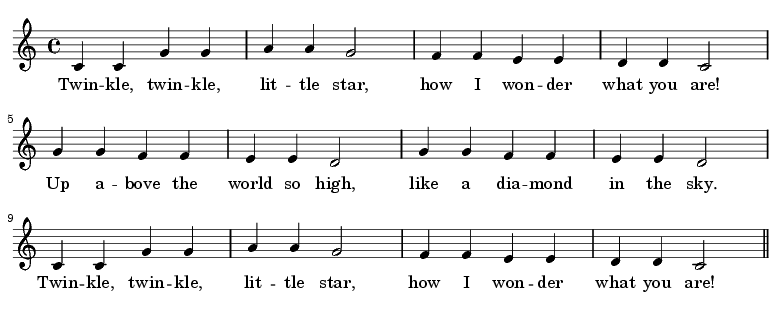
It has also been suggested "twinkle twinkle little star" is easy to learn and has a simple beat so I can easily integrate the tabor. First step is to map the pipe fingering chart to the music. This should be straight forward. My ability to read sheet music is almost non-existent so my learning curve is going to include a many corners. All fun!
Twinkle Twinkle Little Star - Music and Lyrics

Fingering and Notes (with blow strength) for the Pipe

Also found a great website with blank sheet music. Going to print out the 6-stave (large for elementary school use), just about my speed I suppose; http://people.virginia.edu/~pdr4h/musicpaper/widerule.pdf
Cumulative commitment: 2.5 hours
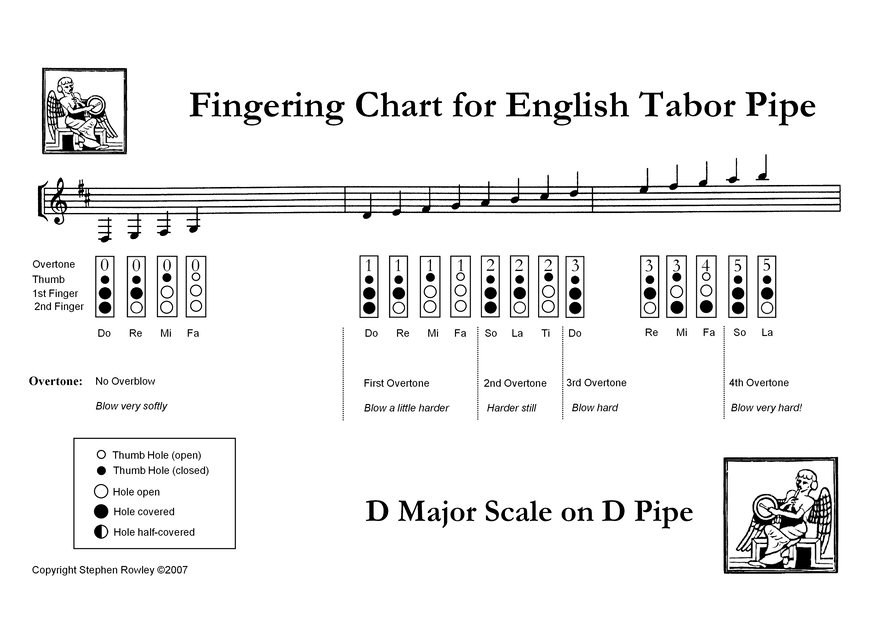
It has also been suggested "twinkle twinkle little star" is easy to learn and has a simple beat so I can easily integrate the tabor. First step is to map the pipe fingering chart to the music. This should be straight forward. My ability to read sheet music is almost non-existent so my learning curve is going to include a many corners. All fun!
Twinkle Twinkle Little Star - Music and Lyrics
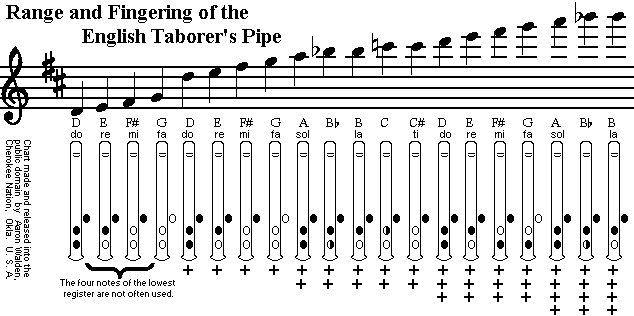
Location of notes of the staff
Cumulative commitment: 2.5 hours
- 1.5 hour reading
- 1 hour blogging (refecting upon)
Sunday, March 13, 2011
Inspire Adult Learners
A few weeks ago I realized that what I really want to do is Inspire Adult Learners, and this is a big part of what I have wanted to do all along. All the work I have done over the last 25 years that has included completing a Masters of Education, developing a lot of software, teaching adults in many different situations and building online communities has been toward one primary goal. I want to inspire adult learners to pursue their passions and use the current technology to assist and facilitate in this pursuit. If you are interested in directing your own learning; the technology available on the internet can provide you most of the tools you require to start being an inspired adult learner.
How to get started
I believe there are two primary activities along the trajectory of self-directed learning online; the consumption of materials and the production of materials. Start with consumption, then very quickly get into production.
 |
| Learning happens with a story, some educational resources and good friends. |
How to get started
I believe there are two primary activities along the trajectory of self-directed learning online; the consumption of materials and the production of materials. Start with consumption, then very quickly get into production.
- Start with blogging. There is no shortage of research indicating that reflecting upon a situation deepens the understanding of the situation. Writing to a blog is exactly that, and to have the blog public only increases a persons quality and further deepens learning.
- Get a better understanding of RSS. RSS is the how you are notified of when your favorite new information becomes available.
- Set up an RSS reader. Setting up your own RSS reader is like creating your own personalized online magazine that only contains articles you are interested in.
- Start tagging. Tagging allows you to create a personalized catalog of all the information you find on the internet.
- Further develop your producer skills. Write lots of blog posts about what you are interested, reflect (in writing) about all that you have learned. (Note: creating learning resources for your consumption on how to develop producer skills will be a big part of this blog over the next while)
- Iterate; Share... revisit old ideas, build on current ideas, have fun, write, blog post, learn, revisit old ideas, build on current ideas, have fun, write, blog post, learn, do it again...
- Engage; Share...tag interesting articles, subscribe to RSS feeds of interest, tag interesting articles, subscribe to RSS feeds of interest,do it again...
Saturday, March 12, 2011
Progressive Video; Platform and Pedagogy
15 months back I described the design / creation of a progressive video assessment system. The AIM Language Professional (ALP) web site has now gone live and therefore so has the technology platform which implements progressive video assessment. We have also recently submitted this project to be considered for the CNIE-RCIE Award of Excellence and Innovation in Instructional Design, wish us all the best.
 The Platform
The platform for building and hosting this product is Drupal 6.x using Kaltura for hosting and streaming the video. After a fairly rigorous selection process the project chose Drupal for a number of reasons;
 Kaltura was chosen for video hosting for its openness, ability to integrate well with Drupal, and easy pricing model.
The Pedagogy
The AIM language professional site was designed to use existing (yet emerging) pedagogical approaches by following both progressive inquiry and connectivism. These two approaches are very well suited to encouraging a learner by their progressing through learning modules while being supported by the network of peers present within the site.
The progressive inquiry model is designed to facilitate engagement in an in-depth process of inquiry and expert-like working with knowledge that are essential for productive participation. The model moves between different activities of discovering and presenting new knowledge, critical reflection, deepening research and activities, and engaging a distributed network of expertise.
The connectivism model is grounded in forming connections where learning is a process of connecting specialized nodes or information sources. Aim Language Professional allows a person to create and connect to many different nodes of either their or others’ making. These nodes include; writing, reflection, video, discussion, quizzes, exams, gesture database, notes, messages and posts.
The use of these two pedagogical approaches occur in the following areas within the site;

The platform for building and hosting this product is Drupal 6.x using Kaltura for hosting and streaming the video. After a fairly rigorous selection process the project chose Drupal for a number of reasons;
- its content management features
- its community and discussion features
- its mature developer community and related support
- the ability to find a very good contract development company
- its ease to integrate with video hosting and streaming providers
- its ability to implement a great user experience
- its open source

The Pedagogy
The AIM language professional site was designed to use existing (yet emerging) pedagogical approaches by following both progressive inquiry and connectivism. These two approaches are very well suited to encouraging a learner by their progressing through learning modules while being supported by the network of peers present within the site.
The progressive inquiry model is designed to facilitate engagement in an in-depth process of inquiry and expert-like working with knowledge that are essential for productive participation. The model moves between different activities of discovering and presenting new knowledge, critical reflection, deepening research and activities, and engaging a distributed network of expertise.
The connectivism model is grounded in forming connections where learning is a process of connecting specialized nodes or information sources. Aim Language Professional allows a person to create and connect to many different nodes of either their or others’ making. These nodes include; writing, reflection, video, discussion, quizzes, exams, gesture database, notes, messages and posts.
The use of these two pedagogical approaches occur in the following areas within the site;
- Learning organizer – this aspect of the ALP allows the learner to organize all their work into a single online portal that they can easily manage. The innovation occurs in how comprehensive and accessible the knowledge gathering toolset facilitates learning, reflection and mentor/peer based learning.
- Mentorship and peer review – the use of learner uploaded video with peer mentorship makes innovative use of video-upload services and the discussion that can occur around the video for assessment purposes.
- Remote observation of classroom – the video also allows for remote (asynchronous) observation of the classroom for rapid assessment feedback to the learner.
Friday, March 11, 2011
Reflections on Software Quality

The great thing is that software testing is a mature practice and their are many options available to organizations who are involved with shipping software. There are many testing frameworks, approaches and standards available. I see there are two themes with software testing; the first being the traditional that was born out of some of the big quality standards like ISO and CMMI. And the second that came from the agile approach of developing software. I have experience within both themes, and my preference is with the Agile / Automated approaches.
CMMI is subscriptive not prescriptive. In other words it is a set of guidelines where your organization needs to have or create the practices that fit the guidelines. CMMI doesn't tell you how to do it (cause that depends on organizational culture) it just says that you need to do these things if you want to achieve a certain amount of maturity in relation to your organizations software development capability.
In my mind, Agile testing means automated testing. The idea being that testing is as automated as it can be and is built into the software development life cycle. In some situations an automated test suite is built before coding of the software has begun. Another would be while the software is being built a dedicated Quality Assurance (QA) team builds automated tests and works in concert with the developers to test as features are being buit, this is my preferred approach. All this is known as test driven development. The cool part of this is a projects can have thousands of automated tests and if a software build makes it through all the tests it will automatically be migrated to quality assurance for the next round of testing to begin. If the test suite fails everyone knows immediately and can address the issue based upon the knowledge of what code changes were most recently done. It can be very motivating to developers to have such a mature development environment.
No matter where your organization sits with all this, thorough testing needs to be done. And having testers who can as closely model end-users would be preferred. If your not that thorough during your software development process your users will quickly let you know where the flaws can be found. Hopefully, your organizational brand will not be negatively impacted by these user discovered flaws.
Wednesday, March 09, 2011
Daughters first radio interview as a musician

http://www.cjsf.ca/vanilla_archives/2011_March_08_19_00.mp3
http://www.cjsf.ca/vanilla_archives/2011_March_08_19_30.mp3
Love you Ana Rose! Keep learning outside the institution!
A New Culture of Learning

"A New Culture of Learning: Cultivating the Imagination for a World of Constant Change", Douglas Thomas and John Seely Brown.
Just finished reading the new book from Douglas Thomas and John Seely Brown. It pretty much captures it for me, the whole idea of learning as play and following your bliss (or passion) while pursuing learning is exactly how I see it. If you have been following my blog over the last while and the anchoring of my self-directed "nophd" you will know I firmly believe in the value in learning through following your passion. Outside of the institution it would be a herculean task to complete a PhD without a strong internal motivation. Not to say it is easy from within the institution, just their are structures to help with getting to completion when in the institution. If you are a life-long learner and considering scholarly pursuits this book is a must read for all adult learners; and parents who are wondering best how to prepare their children for a future of constant change.
I have been a follower of John Seely Brown since his co-authorship of the article "minds on fire". This article galvanized my change of career when I brought together 15 years of information technology work with 8 years being college and university faculty. The reason I bought the book was I caught wind of the difference between a collective and a community and how a person learns within the collective. And how a person within a collective is different than a person within a community. Essentially, the person serves the community and the goals of the community where a collective has many participants and the people are served by the collective. This is an important difference to the motivations behind engagement. From the life-long learner perspective, finding a collective where your interests are strongly aligned is a blessing and a great support for your learning.

Thomas and Seely-Brown make use of the word indwelling, which originated from Michael Polanyi. I found the use of the word indwelling as new for me. Though I have thought about it often, particularly as I have been thinking about my "nophd" and how it could take a great deal of time to gain the expertise to have a PhD depth of knowing. And this mastery of a subject occurs through a prolonged study of a subject. For me I recognize this and aspire to master folk music and dance over the next period of time, whether it be 10 or 30 years. As adult learners I believe this is the playfulness and ease which is found as one attains indwelling that will assist in success. All good!
Where I found the book could have elaborated more is in how this thinking could be applied in institutional environments. Over the last few years I have been very critical of institutionalized learning and recently I have been thinking more about all this great work with the new approaches to learning and rarely do I read about how they could alter and enhance institutionalized learning. I thought the book was going to get into it for it touched upon the number of hours students spend on campus and how much "free" time they have outside the classroom. I see this time as being open to be occupied by this kind of learning, the free flow of exploring ideas and following those subjects which excite the learner, even if they are on campus.
I loved the story this book told. It did a great job of setting the stage and followed up with a succinct and powerful description of how people are and will be learning in the 21st century. A great read for all the life-long learners who want to add approaches and understanding to their learning.
Saturday, March 05, 2011
Consolidation of blogs
A month ago I decided to move my website hosting all over to rackspace and this has been progressing very well. Changing hosting providers is not a small task as I have my own domains and those of a couple of clients also hosted with netnation. The hosting provider move will require the following steps;
I have also moved my first blog (2004 - 2007) from blog.rawsthorne.org to have all the post a part of this criticaltechnology blog. There was not an export service from my original blog so this took some effort. It was time well spent as I got to review my past writings. Quite interesting to again read my thinking from six to eight years ago. The main themes and standout posts are;
The next phase of the migration is to create my new rackspace instance. Oh, the technical fun begins...
Contact clients, tell them of the moveAssist clients with their move as we agreeReview my services and develop migration strategyConsolidate my blogs- Create rackspace instance
- Move bit.bc.ca with focus on creating and testing email services
- Move endeavours.com with focus on email services, mysql, php, REST APIs, and Drupal
- Move rawsthorne.org with focus on website and email services
I have also moved my first blog (2004 - 2007) from blog.rawsthorne.org to have all the post a part of this criticaltechnology blog. There was not an export service from my original blog so this took some effort. It was time well spent as I got to review my past writings. Quite interesting to again read my thinking from six to eight years ago. The main themes and standout posts are;
- The importance of software quality on technology start-up success
- The formation of my ideas around ICT4D and how it should be driven from the village out
- The creation of a Learning Systems Architect job description
- A whole lot of thinking about Agile software development and how to manage small teams
- Prediction of SEAMLESS LEARNING
The next phase of the migration is to create my new rackspace instance. Oh, the technical fun begins...
Thursday, March 03, 2011
Internal corporate blogging
With such large numbers of knowledgeable and skilled people retiring, wouldn’t it make sense to have them blog (or contribute to a wiki) every day as a part of their job description. They would create postings about the work they do and the wisdom they have before they leave the building for their retirement. Once in a blog or wiki all this knowledge could then be indexed by the internal indexing / search engine and it wouldn’t be lost.
Tuesday, March 01, 2011
Sir Isaac Newton and Lorenz's Butterfly
Oh the wonders of Morris Dancing. I came to a deeper understanding of one of our dances over the last week. The dance is known as Lorenz's Butterfly. I actually find it one of our most beautiful dances, this is due to its dynamic flow and simplicity. It is also the only dance I know how to call. Here is a version danced by Bogart's Breakfast;
What gave me a deeper understanding was initiated by my watching this outstanding BBC production titled; Complexity - Secret Life of Chaos, and the reading of some amazing scientific minds;
So what really got me thinking about how all this fits together is how the dance has four dancers ganging up on one dancer, dressed as the devil. I see the four dancers being Alan Turing, Edward Lorenz, Boris Belousov and Robert May all beating up on Sir Issac Newton signifying the death of the Newtonian scientific view. And therefore giving birth to a new science that includes Chaos Theory... The dance has the following moves which signify the following themes;
What gave me a deeper understanding was initiated by my watching this outstanding BBC production titled; Complexity - Secret Life of Chaos, and the reading of some amazing scientific minds;
- Edward Lorenz and his work with Chaos Theory and the butterfly effect.
- Alan Turing and his interest in Mathematical Biology.
- And a couple of other amazing minds mentioned in the BBC episode.
So what really got me thinking about how all this fits together is how the dance has four dancers ganging up on one dancer, dressed as the devil. I see the four dancers being Alan Turing, Edward Lorenz, Boris Belousov and Robert May all beating up on Sir Issac Newton signifying the death of the Newtonian scientific view. And therefore giving birth to a new science that includes Chaos Theory... The dance has the following moves which signify the following themes;
- Opening - ganging up on Newton.
- Chorus - exchange of ideas.
- Round the gardener - scientific inquiry within a focused area of study.
- Chorus - further exchange of ideas.
- Flutter - the birth of a new theory.
- Chorus - further exchange of ideas.
- Lines - the communication of a new theory.
- Chorus - further exchange of ideas.
- Exit - the setting free of the new theory.
Friday, February 25, 2011
Networked and Open also means Collaborative
This is what the Networked and Open PhD (NOPhD) is all about. It is about working with others in an open and collaborative way so everyone deepens their knowledge on a shared subject domain. The great part would be if everyone who is in the collaborative cohort aspired to develop a PhD level of knowing within the subject they share a passion. Due to the networked (and collaborative) aspect of the NOPhD I believe a number of people in the cohort need to make it to the PhD depth of knowing, otherwise it couldn't be considered networked. So I have faith and begin to encourage (and hopefully inspire) the people around me (virtually and otherwise) who are interested in this pursuit of developing a deeper knowing of Folk Music and Dance. And those interested in pedagogy, technology and life-long learning; for I will be drawing on these skills and knowledge as I build upon this anchor subject.
So what exactly does this look like? Well why don't I describe my week and how certain events fit into the networked and collaborative;
So there you have it. Five days after committing to Folk Music and Dance as the anchor subject for my Networked and Open PhD I already have begun engaging three people in my new online learning community and have made face to face contact with another who is interested in my journey. Ahhh... self directed and collaborative learning at its best.
So what exactly does this look like? Well why don't I describe my week and how certain events fit into the networked and collaborative;
- On February 24th I committed to Folk Music and Dance as the anchor subject for my "nophd". This decision was assisted by my network.
- I did some searches on the history of Morris dance and the instruments used, I knew of and was looking for a whistle type instrument played in one hand. I discovered the pipe and tabor was what I had been looking for. I found few sites and ordered some pipes and some books. During these transactions I made contacts, exchanged emails and have added a couple more people to my network directly involved with my chosen subject area. They offered assistance if I request.
- I also found a couple of groups online, including one in facebook. So I asked a couple of questions and already have replies. It was even suggested that I start with learning Good King Wenceslas. So once I get the scales down and am feeling comfortable with the fingering I will start with this song. I need to trust the suggestions of my network.
- I also had an email exchange with the whistle blower in our Morris side and he is jazzed about having a pipe and tabor in the group and is also interested in learning the instrument.
 |
| After discussion it would seem I can adjust flute scores to the pipe. |
So there you have it. Five days after committing to Folk Music and Dance as the anchor subject for my Networked and Open PhD I already have begun engaging three people in my new online learning community and have made face to face contact with another who is interested in my journey. Ahhh... self directed and collaborative learning at its best.
Monday, February 21, 2011
Networked and Open PhD (#nophd)
So I've committed to using "nophd" as my hashtag rather than "onphd".
Why? for a number of reasons;

Why? for a number of reasons;
- NoPhD has a better likelihood of becoming a meme than OnPhD.
- What I am doing is thumbing my nose at the PhD. Because I believe it is no longer relevant for the adult life-long learner. Particularly, given I have no intention of becoming an academic.
- What I am doing is No PhD, because I see the PhD as an academic brand.
- In this endeavour I believe the Networked part is much more important that the Open part. So the N should come before the O.
- I like the humorous side of calling it a NoPhD, even though it means Networked and Open.
- I'm doing this because I want to serve as an example (maybe even an inspiration). I want to show how a person using many corners of the available technology and pedagogical approaches can deepen their knowing in a chosen subject area. I want to become a case study in developing a PhD level of understanding in the open while drawing on my network and collaborating with others with similar interests. I also want to help others do the same. I don't want No stinkin' PhD!

Sunday, February 20, 2011
Pipe and Tabor
So my first steps toward "nophd" begin. I have ordered a couple of pipes from the taborers society. And I have purchased a couple of books from Kelischek Workshop for Historical Instruments.

 I also have a recently burned CD of our Morris sides popular music and I will be loading this into my Ableton live based studio. Here I will begin to record my musical learning, I will record my first attempt at playing the pipe so we have a baseline to my progress.
I have also joined the Pipe and Tabor group on facebook, and this already seems to be connecting me to my new learning network. All good!
I have also joined the Pipe and Tabor group on facebook, and this already seems to be connecting me to my new learning network. All good!
Saturday, February 19, 2011
An anchor subject for my Open PhD

I really like where all this went. I was forced to think about completion and what it would take. The personal conclusion I drew was that exploring pedagogy, technology and life-long learning could not sustain me as a subject. Its what I do for a living, and I do it fairly well already with a proven track record and mastery. For me it really comes down to passion toward the subject of study, particularly if you are going to be self directed. I believe this will be true for most people endeavouring toward an Open PhD outside of the motivations inherent with doing a traditional PhD within a traditional institution.
I really appreciate the people who responded to my poll and put the energy into thinking about the question I was asking.
Thursday, February 17, 2011
Manage your online reputation
When doing an Open PhD or pursuing some form of life-long learning or academic study people will often speak of getting the degree, diploma or some certificate. I can see the value in having these from a recognized institution, but, in the end I consider it credentialism and no competition for good reputation management. If you are in pursuit of recognition for your life-long learning or academic study I suggest the better route would be a good reputation management strategy, rather than incur the cost and time of pursuing a credential from a recognized institution. In the age of the social graph, reputation is more important than credentials and will increasingly be used in securing jobs and showing an expertise in a subject area. I believe University credentials will decrease in value over the next 15 years and beyond.
Build an understanding;
Create a good understanding of online reputation management, the two queries that yield good reference toward this are;
Regularly practice the following;
The goal;
The goal of all this is to have the people you consider experts within your chosen area of study begin to follow you and make comment on your works. These people become your Personal Learning Network!
Build an understanding;
Create a good understanding of online reputation management, the two queries that yield good reference toward this are;
Regularly practice the following;
- Follow the home-base and outpost approach, post everywhere, post often.
- After reading a post or article and you have a comment, make it, and in the author profile link back to your home-base.
- As soon a you become aware of a new social media site be sure to secure your name on the site, have your profile refer back to your home-base.
- Write, produce, create resources that have some weight and add to the discussion within your chosen subject area. Be thorough, frequent, reference others and create quality!
- Set up Google Alerts on your name and other keywords in your chosen subject; monitor these.
- Review your traffic statistics, get a sense of why people are coming to your resources, and which keywords they are getting them to you.
The goal;
The goal of all this is to have the people you consider experts within your chosen area of study begin to follow you and make comment on your works. These people become your Personal Learning Network!
Wednesday, February 16, 2011
Polling widgets in blogger
If you use blogger adding a poll to your blog is easy. And the way it is implemented allows polls to be associated with the whole blog or just a single post. The same poll can be used in multiple posts while the poll results stay the same.
This can be done by adding the poll gadget to your blog from the blog design mode. While creating the poll take note of the title as you will use this to find the poll in your blogs source code.

Once you have added the poll to your blog you will need to view the source code and find the iframe that contains the poll. The code for the poll will look something like what is displayed below, what you are after is within the iframe tags. The important part is the display number as this identifies your particular poll, in this example it is "1642576544783516899". So you can display the poll in any post as long as you use the same iframe syntax and the id number refers back to the poll as stored in blogger.
If you no longer want the poll displayed as a gadget on you blog page (but still within the post) you can delete it from within blogs design mode and the poll will still remain in the blog post. This is due to the id number.
This can be done by adding the poll gadget to your blog from the blog design mode. While creating the poll take note of the title as you will use this to find the poll in your blogs source code.

Once you have added the poll to your blog you will need to view the source code and find the iframe that contains the poll. The code for the poll will look something like what is displayed below, what you are after is within the iframe tags. The important part is the display number as this identifies your particular poll, in this example it is "1642576544783516899". So you can display the poll in any post as long as you use the same iframe syntax and the id number refers back to the poll as stored in blogger.
<h2 class='title'>The fat cat sat on the </h2>
<div class='widget-content' id='widget-content'>
<iframe allowtransparency='true' frameborder='0' height='180' name='poll-widget1642576544783516899' src='http://www.google.com/reviews/polls/display/1642576544783516899/blogger_template/run_app?txtclr=%23634320&lnkclr=%23e2a059&chrtclr=%23e2a059&font=normal+normal+100%25+Helvetica%2CArial%2CVerdana%2C%27Trebuchet+MS%27%2C+Sans-serif&hideq=true&purl=http%3A%2F%2Fcriticaltechnology.blogspot.com%2F' style='border:none; width:100%;'></iframe>
If you no longer want the poll displayed as a gadget on you blog page (but still within the post) you can delete it from within blogs design mode and the poll will still remain in the blog post. This is due to the id number.
Tuesday, February 15, 2011
Influence my journey toward an Open PhD
If you were to follow someone online who is going to invest in documenting the process of developing a new area of knowing for themselves would you rather watch them in the area of;
- Pedagogy, technology and life long learning
- Develop a mastery of folk music and dance (while learning a musical instrument)
- Building traditional in-shore wooden boats
Would you rather follow me doing an Open PhD on
Monday, February 14, 2011
A new area of knowing
So I continue on my path toward an Open and Networked PhD and in my last post I was musing about what am I doing and what is the point and all that navel gazing type of activity. I believe this navel gaze is an important step; for it will confirm my commitment to this journey and remove the doubt that I have chosen the correct subject area that will engage me enough to completion. Completion is very important. The first two questions from my previous post are about mastery and my chosen area of study. These two questions are;
I'd like to think I have a mastery of pedagogy, technology and life long learning. Now this isn't saying there isn't more I could learn in these areas, but I do have the following education and experience in these areas;
If you were to follow someone online who is going to invest in documenting the process of developing a new area of knowing for themselves would you rather watch them in the area of pedagogy, technology and life long learning or watch them develop a mastery of folk music and dance or building wooden boats? Keep in mind I will document my experience by using all I know in pedagogical approaches and technology. I will also engage experts in my chosen area whenever they make themselves available.
1. A PhD is about mastery and do I want to further master something I am already a master?
I'd like to think I have a mastery of pedagogy, technology and life long learning. Now this isn't saying there isn't more I could learn in these areas, but I do have the following education and experience in these areas;
- An undergrad degree (with honours) in Technology; a Bachelor of Technologies with specialty in database management.
- 20 years professional experience working on and building information technologies. My responsibilities in this profession are broad, best to look at my linkedin profile.
- Masters of Education with specialty in Information Technology.
- Eight years teaching adults at the College and University level; an additional three years teaching online and being deeply involved with the early stages of WikiEducator.
- Involvement in the release of eight software initiatives during this year alone. My involvement has been architect / project manager / database administrator / even programmer over all or some of these initiatives. Each of these initiative shows a mastery of pedagogy, technology and life long learning.
- Progressive video assessment; AIM language professional
- Content level single sign-on; a RESTful API enforcing authorization to learning content
- Legal Search; a federated and faceted search over seven information silos
- Taxonomy cleanup; once federated the taxonomies required alignment
- Online TV; an episodic online streaming of talking heads with focus on a specific legal subject
- Practice Manuals
- Engagement Questions; encouraging a depth of learning using existing video recourses
- Online community; CLEOnline & AIM language professional
2. I'd rather master something new (and therefore, fun), as I would otherwise become bored (see item 1). Should my Open and Networked PhD build on what I already know or should I develop a completely new area of knowing?
If you were to follow someone online who is going to invest in documenting the process of developing a new area of knowing for themselves would you rather watch them in the area of pedagogy, technology and life long learning or watch them develop a mastery of folk music and dance or building wooden boats? Keep in mind I will document my experience by using all I know in pedagogical approaches and technology. I will also engage experts in my chosen area whenever they make themselves available.
Would you rather follow me doing an Open PhD on
Yes, it all sounds like a lot of work, but what else am I going to do over the next 30 years?
Thursday, February 10, 2011
On doing an OpenPhd
Yesterday, I was re-reading a 14 month old post about executing on an Open PhD written by a friend of mine, Dan Pontefract. It was good to read the comments so many months later and think about what was being said. I really appreciated the comments from practicing academics, in particular Richard Smith. I have the greatest respect for Richard due to his focus on supervising people through to completion in their graduate studies. I even know of him assisting people from other institutions in their completion. People who know my work know that I spent some time studying and facilitating workshops on completion and supervision when out at Memorial University of Newfoundland. The point is that completion rates aren't as good as they should be and Richard is a champion in assisting people to completion. When Richard wrote of the carrot that was going to get you through to completion I thought deeper about my field of study and if my self created carrot would get me to completion, regardless if the study was Open or otherwise. Anyhow, It's all good. As I continue to pursue the idea of an Open and Networked PhD (ONPhD) the re-reading of Dan's post (and its comments) really got me thinking about my Open PhD. The questions it prompted are very necessary and fundamental for me at this beginning stage of the ONPhD;
- A PhD is about mastery and do I want to further master something I am already a master?
- I'd rather master something new (and therefore, fun), as I would otherwise become bored (see item 1). Should my Open PhD build on what I already know or should I develop a completely new area of knowing?
- Currently, I am pursuing an Open PhD because I want to increase my reputation in my chosen profession, does this make sense? Is this the best (and only) way to increase my reputation?
- This pursuit is also about creating a virtual research lab to deepen my understanding (I'm predominantly a kinesthetic learner) of online self direct life long learning, and sharing what I learn/do along the way. Is wrapping it in the concept of a PhD really necessary? Isn't a PhD mostly about research, being a recognized expert, becoming a university professor, getting interviewed on CBC?
- Is an ON PhD, as currently being discussed, really that different than a traditional PhD? Isn't the disruption just a way to get out of paying fees and being aligned / restrained by the academy?
Thursday, February 03, 2011
Tagging for community of practice
Over the last few weeks I have been thinking about, and discussing, a couple of tags within the folksonomy for an Open PhD. The main discussion has been with Leigh Blackall regarding the use of 'openphd' vs. 'onphd'. There are a number of themes within this discussion important to the Open PhD, in particular, the tagging approach in general. These themes influence the choice of a tag and how it is used.
All this comes back to the use of these two tags;
openphd - which seems to have become the meme for the Open PhD, it's obvious why.
onphd - which is meant to represent the Open and Networked PhD. This makes more sense as a tag for the Open and Networked PhD, for what we are doing will rely heavily on our social / learning network.
So what is my approach within all this?
I'm going to use both tags, openphd because it has become how I think about what I am doing and I believe it has become the meme regarding the Open PhD; networked and otherwise. I am also going to use onphd for items I come across that are reference toward the open and networked aspect.
Note: What do I mean by surrounding tags. These are the tags that become words within the folksonomy shared by the CoP.
- the tag should become the meme (or identifier) for all those inspired by or engaged in this activity. This does not exclude the use of other tags (or words) that become a part of the folksonomy.
- tagging builds the Community of Practice (CoP) folksonomy. A tag and its 'surrounding' tags become a part of the folksonomy within the community participating in the subject area containing the tag (or word). This is also a semantic web issue. Its like adding reference points to the knowledge shared within a CoP. It is important to recognize the Open PhD movement is a CoP.
- tags should also resonate with how you personally organize data in your head. (your contribution to the folksonomy) It is this like mindedness (or common tags) that further connects the CoP.
- tags are global, community aligning and individual all at the same time. The tag can be referenced through your profile or through the communities or global folksonomy. Your personal tags are a subset of the global. see the difference here;
http://www.delicious.com/tag/openphd
http://www.delicious.com/prawstho/openphd
All this comes back to the use of these two tags;
openphd - which seems to have become the meme for the Open PhD, it's obvious why.
onphd - which is meant to represent the Open and Networked PhD. This makes more sense as a tag for the Open and Networked PhD, for what we are doing will rely heavily on our social / learning network.
So what is my approach within all this?
I'm going to use both tags, openphd because it has become how I think about what I am doing and I believe it has become the meme regarding the Open PhD; networked and otherwise. I am also going to use onphd for items I come across that are reference toward the open and networked aspect.
Note: What do I mean by surrounding tags. These are the tags that become words within the folksonomy shared by the CoP.
Wednesday, February 02, 2011
Building my home base on rackspace
I'm moving all my domains over to rackspace and will firmly establish them as my home base. The sites include the following;
- rawsthorne.org - this is my personal site and will be used to host my personal profile and all published content and links for my Open PhD
- endeavours.com - eventually this will host the site for the massively collaborative assessment system (or some other domain name, TBD)
- bit.bc.ca - Bowen Institute of Technology, this will be the instance pointing at the blended learning / community of practice site where people can work toward of becoming a Solutions Architect / Learning Systems Architect.
- Cost. Cumulatively netnation costs me about $400 per year, I believe I will have my dedicated cloud server for about $100 per year to start.
- Features. I was building some PhP/MySQL software a while back and I ran into challenges in altering the .hosts file to support a RESTful API I was building. Even after contacting netnations technical support they couldn't help me. I ended up using rackspace, their support was awesome.
- Cloud based servers. I firmly believe in cloud based approaches and if I can host multiple sites with the ability to expand for close to $100 per year, why wouldn't I move.
Sunday, January 30, 2011
My changing tagging strategy
There are five main themes to the work I will be doing while completing my OpenPhd. And each of these themes need to be tagged so they can be referenced by myself and others. The five tags I will use with be;
- openphd - resources for people doing an open phd or watching others do an open phd. http://www.delicious.com/prawstho/openphd - this is a more personal tag for how I am referencing online materials.
- nophd - resources for people doing a networked and open phd or watching others do a networked and open phd. http://www.delicious.com/prawstho/onphd - this is a community tag for the community of practice forming around a networked and open phd.
- solution-arch - solution architecture resources. http://www.delicious.com/prawstho/solution-arch
- mba-arch - solutions architecture for the mba / business person resources. http://www.delicious.com/prawstho/mba-arch
- learner-arch - learning systems architecture resources. http://www.delicious.com/prawstho/learner-arch
- they are a follower or contributor to the open phd movement (yes, I'm calling it a movement)
- they are a solutions architect, systems architect or enterprise architect or aspiring to be any of these roles and want to learn more or have another view on architectural issues.
- they are a business person wanting to gain a greater understanding of technology architecture, business processes, the vocabulary and best practices within this realm.
- they are a learning systems architect or educational technologist or aspiring to be either of these roles and want to learn more or have another view on architectural issues.
Saturday, January 29, 2011
7 releases in the next 8 months
2011 is going to be a significant year for my consulting practice. About 10 years ago I made the conscious decision to complete a Masters of Education in Information Technology. I really wanted to bring together my software development career with my teaching career. I really wanted to shift my living to building educational technology and create educational content. I really think this year is going to be an accumulation of that decision, and that really excites me. I believe I need to cerebrate! I will celebrate each accomplishment as it is completed. And when I say completed, it has gone live on the internet and is available for consumption.
The first of these releases is a project that started late in 2009. I was asked to come in and assist with the initial design, architecture and partner selection for a peer based video assessment site for language learners. So, one year later the site goes live and I believe we have done something quite innovative when it comes to peer based mentorship and creating a community of practice platform. I believe the innovation is mostly around the use of video within the site and within the peer-mentorship practice. This is a beautiful site focused on professional development of teachers, put together for AIM language Learning and built by AppNovation Technologies. As a further endorsement of my work and now the site is going live I have been asked to do follow-up work to assess the depth of learning and value proposition being provided by the site. This is exactly the kind of work I was hoping to achieve when I brought my technology back-ground together with my love of learning.
The first of these releases is a project that started late in 2009. I was asked to come in and assist with the initial design, architecture and partner selection for a peer based video assessment site for language learners. So, one year later the site goes live and I believe we have done something quite innovative when it comes to peer based mentorship and creating a community of practice platform. I believe the innovation is mostly around the use of video within the site and within the peer-mentorship practice. This is a beautiful site focused on professional development of teachers, put together for AIM language Learning and built by AppNovation Technologies. As a further endorsement of my work and now the site is going live I have been asked to do follow-up work to assess the depth of learning and value proposition being provided by the site. This is exactly the kind of work I was hoping to achieve when I brought my technology back-ground together with my love of learning.
Home bases and Outposts
Recently I have been thinking about how social media and hosted content relate to the organization, a companies internet presence and personal projects. This has come up for two reasons; 1. thinking about the brand and community building for a client and 2. because I have started my OpenPhD. What's important is where the content gets hosted within these realms; do you have it on a company or personal website that you are in control? Or do you put it on a shared service like facebook, wikipedia, blogger, etc... This decision is well articulated in the idea of home bases and outposts.

For organizations / companies the home base is important so you don't lose control over your content and your brand. Content stored elsewhere can be moved, more easily copied and deleted. The policies around your content are not yours, they are the policies from the shared service. Putting content on the shared service makes sense when you are wanting to attract attention and drive traffic back to your own site. Usually, the content put on the shared service is a copy of what you have stored on your own site(s). Essentially the outposts attract attention and drive traffic back to your business (or home base).
For myself attempting the significant endeavour of an OpenPhD needs to have an online presence I have control over the content, how it is referenced and the ability to add and alter the software features around my content. This was apparent when I wanted to use delicious to bookmark my readings and references but couldn't reference delicious bookmarks in my Wikiversity profile due to the platform not supporting JavaScript. So, in the end I will build up my personal website to be my home base and refer to all other locations as outposts.

For organizations / companies the home base is important so you don't lose control over your content and your brand. Content stored elsewhere can be moved, more easily copied and deleted. The policies around your content are not yours, they are the policies from the shared service. Putting content on the shared service makes sense when you are wanting to attract attention and drive traffic back to your own site. Usually, the content put on the shared service is a copy of what you have stored on your own site(s). Essentially the outposts attract attention and drive traffic back to your business (or home base).
For myself attempting the significant endeavour of an OpenPhD needs to have an online presence I have control over the content, how it is referenced and the ability to add and alter the software features around my content. This was apparent when I wanted to use delicious to bookmark my readings and references but couldn't reference delicious bookmarks in my Wikiversity profile due to the platform not supporting JavaScript. So, in the end I will build up my personal website to be my home base and refer to all other locations as outposts.
Monday, July 26, 2010
Architecture from continuous refractoring
Last week I was asked to answer some questions for a research project involving emerging architecture and refactoring I felt my answers would make a good post. Read below;
1. Have you seen/experienced cases where software architecture emerges successfully from continuous small refactoring?
Yes. I have experienced cases where software architecture continuously influences the development approach within small refactoring efforts. I do NOT see architecture emerging FROM each refactoring effort, I see architecture influencing the approach at the beginning of the sprint and then development iterations provide slight alterations to the overall architecture. What emerges has been strongly influenced by the architecture specified (or agreed to) going into the sprint.
I have seen this approach creating many successful and implemented architectures. Architectural mores (or best practices) become entrenched within the team and continuously influence design at the beginning of each sprint.
2. What are the main reasons that make the emerging of software architecture from continuous small refactoring success, according to your observations/experiences?
Architecture will always occur. No system can be implemented without architecture. The architecture may be optimal or it may be chaos; either should be considered architecture, for better or worse... it is still architecture. I have experienced two cases where architecture did not emerge from the continuous small refactoring. In both cases architectural groups (separate from the agile development teams) were present within the organization. Essentially the architecture groups dictated the architecture; the agile teams were restrained and worked within the prescribed architectural constraints.
4. What are the main reasons that cause such unsuccessful emerging of software architecture from continuous small refactoring, according to your observations/experiences?
Banking Software: 250 person software development company focused on Core banking systems had five person architecture group with one manager. Agile groups of developers were restrained by architectural guidelines created, promoted and “enforced” by the architectural group.
Insurance Company: 5000 person insurance corporation with numerous IT and development groups had 10 person Enterprise Architectural group. Some small development teams used Agile approaches. Architecture did not emerge from refactoring efforts due to architecture groups governance (or restraints) upon architecture.
6. How many years of experience do you have in using agile methods?
Seven
7. Which agile methods (e.g., Scrum, XP) have you used?
XP
8. Which application domains (e.g., automobiles, telecommunications, finance, medical devices, web-based socio-technical systems, and etc.) you have been working in?
Core Banking, Wealth Management, Insurance, Health / Medical, Legal education, DRM / software licensing, Others...
9. What is your definition/understanding of software architecture? (You can refer to a definition you like or give your own understanding.)
Wikipedia has a reasonable definition; http://en.wikipedia.org/wiki/Software_architecture
Or
The infrastructure (hardware and software), guidelines, approaches, designs, roadmaps and best practices that sheppard solutions toward business strategy.
1. Have you seen/experienced cases where software architecture emerges successfully from continuous small refactoring?
Yes. I have experienced cases where software architecture continuously influences the development approach within small refactoring efforts. I do NOT see architecture emerging FROM each refactoring effort, I see architecture influencing the approach at the beginning of the sprint and then development iterations provide slight alterations to the overall architecture. What emerges has been strongly influenced by the architecture specified (or agreed to) going into the sprint.
I have seen this approach creating many successful and implemented architectures. Architectural mores (or best practices) become entrenched within the team and continuously influence design at the beginning of each sprint.
2. What are the main reasons that make the emerging of software architecture from continuous small refactoring success, according to your observations/experiences?
- Grounded in actual software implementation
- I manage refactoring projects as improvement projects. The architecture is also improved.
- Successful architecture should be measured by implemented architecture. (As opposed to documented and prescribed architecture)
- Refactoring success using agile approaches includes a high level of communication. Within an experienced group this dialogue always includes architectural themes; this also improves architecture.
Architecture will always occur. No system can be implemented without architecture. The architecture may be optimal or it may be chaos; either should be considered architecture, for better or worse... it is still architecture. I have experienced two cases where architecture did not emerge from the continuous small refactoring. In both cases architectural groups (separate from the agile development teams) were present within the organization. Essentially the architecture groups dictated the architecture; the agile teams were restrained and worked within the prescribed architectural constraints.
4. What are the main reasons that cause such unsuccessful emerging of software architecture from continuous small refactoring, according to your observations/experiences?
- See answer to previous question.
- Architecture is dictated by and architectural group, the architecture must be complied to or the project with not continue.
Banking Software: 250 person software development company focused on Core banking systems had five person architecture group with one manager. Agile groups of developers were restrained by architectural guidelines created, promoted and “enforced” by the architectural group.
Insurance Company: 5000 person insurance corporation with numerous IT and development groups had 10 person Enterprise Architectural group. Some small development teams used Agile approaches. Architecture did not emerge from refactoring efforts due to architecture groups governance (or restraints) upon architecture.
6. How many years of experience do you have in using agile methods?
Seven
7. Which agile methods (e.g., Scrum, XP) have you used?
XP
8. Which application domains (e.g., automobiles, telecommunications, finance, medical devices, web-based socio-technical systems, and etc.) you have been working in?
Core Banking, Wealth Management, Insurance, Health / Medical, Legal education, DRM / software licensing, Others...
9. What is your definition/understanding of software architecture? (You can refer to a definition you like or give your own understanding.)
Wikipedia has a reasonable definition; http://en.wikipedia.org/wiki/Software_architecture
Or
The infrastructure (hardware and software), guidelines, approaches, designs, roadmaps and best practices that sheppard solutions toward business strategy.
Tuesday, December 29, 2009
Progressive Video Assessment
A recent project has taken me down the path of designing a peer based assessment surrounding a learners uploaded videos of their displaying skills in action. All the technologies and approaches are now available at a reasonable cost to enable video based peer assessment or IMHO better titled as "progressive video assessment". The main ideas being leveraged are;
Utilizing a Progressive Inquiry type approach provides a good foundation for it encourages an iterative process for building understanding and deepening meaning. It also acknowledges the importance of peers and mentors in the learning process.
The aim of a video based peer assessment approach is to bring people to a level of mastery within a given subject area. The subject area needs to be appropriate for video as a medium for capturing demonstrated skills. We want people who already have basic competency in an area wanting to improve through peer review and feedback from others with greater expertise.
Step 1. Learners provide evidence of subject knowledge (traditional assessment)
Step 2. Learners review rubric(s) describing competencies for level being attempted
Step 3. Learner video is recorded and upload (privacy ensured as videos are only available to reviewer cohort and can be deleted once review is complete)
Step 3.1. Uploaded video is immediately assigned a cohort of reviewers
Step 4. Learner kicks of discussion by answering a number of system assigned self-assessment questions.
Step 5. A small private cohort engages in facilitated discussions giving feedback focused by the respective rubric and learner answered self-assessment questions
Step 6. Reviewers also get credit toward their progression through the levels for providing the peer review
Step 7. For quality, reviews and videos are randomly / periodically critiqued by experts
In two coming posts I'll be describing the approach (or theory) behind the peer assessment and the technology infrastructure to support video based peer assessment.
- Learners progressing through different sets of competencies grouped into levels.
- Learners are grouped into virtual cohorts, that change depending on pace, availability and competencies.
- As learners complete competency sets they also provide feedback to those who have not yet completed the competencies.
- A part of a learners own assessment is providing an amount of feedback to their peers, this follows more of a master-apprentice type model. The master is only one or two levels ahead of the apprentice.
- Feedback is provided in private discussions triggered by an uploaded video demonstrating competencies and the learners self-assessment.
- Competencies are described in rubrics.
Utilizing a Progressive Inquiry type approach provides a good foundation for it encourages an iterative process for building understanding and deepening meaning. It also acknowledges the importance of peers and mentors in the learning process.
The aim of a video based peer assessment approach is to bring people to a level of mastery within a given subject area. The subject area needs to be appropriate for video as a medium for capturing demonstrated skills. We want people who already have basic competency in an area wanting to improve through peer review and feedback from others with greater expertise.
Step 1. Learners provide evidence of subject knowledge (traditional assessment)
Step 2. Learners review rubric(s) describing competencies for level being attempted
Step 3. Learner video is recorded and upload (privacy ensured as videos are only available to reviewer cohort and can be deleted once review is complete)
Step 3.1. Uploaded video is immediately assigned a cohort of reviewers
Step 4. Learner kicks of discussion by answering a number of system assigned self-assessment questions.
Step 5. A small private cohort engages in facilitated discussions giving feedback focused by the respective rubric and learner answered self-assessment questions
Step 6. Reviewers also get credit toward their progression through the levels for providing the peer review
Step 7. For quality, reviews and videos are randomly / periodically critiqued by experts
In two coming posts I'll be describing the approach (or theory) behind the peer assessment and the technology infrastructure to support video based peer assessment.
Saturday, December 26, 2009
Ubuntu Drupal and multiple Virtual Hosts
A few months back I completed a small project to enable a simple single sign-on approach to product level information access. This wasn't a replacement for OpenID or anything like that, for that would be a crazy thing to take on. What I did was to build a way to assess whether a user had subscribed to one or more information resources within a site that contains many resources. What I created leveraged cookies, an expiry system, and the restful API. This was all good.
To develop all this I used an old Dell Inspiron laptop running a UAMP (Ubuntu, Apache, MySQL, PhP) stack. The project is now running in DEV and is moving into QA so I still need my development environment. I've got another development project where I want to evaluate the quiz / question modules available within Drupal and I want to create another virtual host on the UAMP development server. This is what I did to set up another virtual host in addition to the localhost already being utilized by the restful API project;
1) added a drupal to the hosts file with the IP 127.0.0.2
2) added a new file to the /etc/apache2/available-sites folder
3) edited the new file to include the correct virtual host entry pointing toward the drupal directory
4) enable the site using the a2ensite command with the new file as the parameter
5) restart apache
All good. Now in the local browser I can run an instance of drupal being hosted at http://drupal
To develop all this I used an old Dell Inspiron laptop running a UAMP (Ubuntu, Apache, MySQL, PhP) stack. The project is now running in DEV and is moving into QA so I still need my development environment. I've got another development project where I want to evaluate the quiz / question modules available within Drupal and I want to create another virtual host on the UAMP development server. This is what I did to set up another virtual host in addition to the localhost already being utilized by the restful API project;
1) added a drupal to the hosts file with the IP 127.0.0.2
127.0.0.1 localhost
127.0.0.2 drupal
2) added a new file to the /etc/apache2/available-sites folder
3) edited the new file to include the correct virtual host entry pointing toward the drupal directory
<VirtualHost 127.0.0.2>
   DocumentRoot /var/www/drupal/
</VirtualHost>
4) enable the site using the a2ensite command with the new file as the parameter
5) restart apache
All good. Now in the local browser I can run an instance of drupal being hosted at http://drupal
Friday, December 04, 2009
How public education should provide ROI on my tax dollars
A month ago I was questioning the value of a University Education. Don't get me wrong, I think higher education is an awesome thing and I believe everyone should (and needs to) be a life long learner. I was just questioning the value of getting higher education at a University. I think there are better ways, particularly when you consider the cost (personal and through taxes) of attending a University. To me the better ways are through what is now available via the Internet (asynchronously 7 x 24). And considering the body of work regarding the different learning approaches (constructivism, connectivism and progressive inquiry apply very well, IMHO) and how these approaches are being incarnated on the Internet it becomes a compelling alternative to traditional higher education.
So all my questioning of the value of higher education was initiated from a few tweets with someone from the PR dept. of a local university and they asked me some great questions about where I was coming from on all this. The question that really stood out for me became;
"What I deem to be a worthy ROI on my tax funded educational investment?"
What I also find interesting is the potential positive impact what I am requesting would have on our economy and resilience as a nation. I also believe I am not alone in my thinking...
So all my questioning of the value of higher education was initiated from a few tweets with someone from the PR dept. of a local university and they asked me some great questions about where I was coming from on all this. The question that really stood out for me became;
"What I deem to be a worthy ROI on my tax funded educational investment?"
- free access to research data - As a taxpayer I shouldn't have to pay for data or research that was created because of grants or the funding coming from tax dollars. There is great progress being made here as evidenced by much activity (a couple of examples; open access at Concordia, and the recent open access week at SFU). I look forward to all tax payer funded data and related publishing being available as open data.
Suggestion: all grants, funded research, etc. should have openness written into their terms.
- pedagogically aware professors - modern academic institutions haven't traditionally focused on the faculty having strong pedagogical skills. There is work going on here, though I do not feel it is enough. My experiences in working for the Instructional Development office of a major Canadian University provided me insights into how graduate, post-graduate and new faculty are developing pedagogical skills, but existing faculty are slow on the uptake. I do think a younger faculty population will make a big difference here, but weve got 10 to 20 years before the scale tips in the students favor. Do I believe my academically very successful daughter should attend a University in the next decade? Considering the Higher Education (HE) faculty pedagogical skills and the use of technology to support learning by HE institutions I believe she may better spend her time elsewhere... time will tell with this; it is good to see the Society for Teaching and Learning in Higher Education (STLHE) has published ethical principles in university teaching and they include a principle on pedagogical competence.
Suggestion: all faculty should have mandatory pro-d with focus on pedagogy.
- improved assessment techniques - assessment still seems like a game show to me - executing exams, writing papers, completing projects and their subsequent grading doesn't capture what a person has learned during a period. Using these "traditional" approaches as a way to assess peoples knowledge on a subject is disconnected. When I think of the explicit knowledge vs. tacit knowledge that a person acquires (needs) to be successful. And when tacit knowledge is considered a greater part of our knowing I just don't see strong evidence that traditional assessment methods capture a persons knowledge on a subject. I believe that much better assessment techniques need to be developed in determining a persons capabilities and knowledge. A greater amount of effort needs to be focused upon assessment within academia.
Suggestion: all institutions should have or participate in a center for assessment excellence. Active research should be going on here.
- transparency and reduction of institutional boundaries - it seems to me that academic institutions are internally focused and overly competitive with each other. In a time where it is apparent that our future is knowledge based and our national (global) economic success is dependent upon our "national intelligence" our tax dollars should go to the greater good instead of funding intra-institutional dysfunction. As an example, why every time I apply to a new institution should I have to pay a fee to get all my transcripts transferred to the new institution? Shouldn't a national database of my academic accomplishments be available? Wouldn't it be nice to have a publicly available transcript served up by the institutions I have attended. As we move into a time where learning is more self-directed, we should be able to cobble together educational activities (courses, workshops, groups, etc.) without having to be conscious of which institution they are being made available. Should we leverage the course materials created by all Canadian institutions in similar subject areas? How different are the learning outcomes for all the same undergraduate courses across all institutions? How much tax payer $$$ are spent in duplicating the same course materials across Canadian institutions. If I was getting good ROI, institutional boundaries would have been eliminated years ago and I would have open access to my educational accomplishments and the accomplishments of the institution and its faculty.
Suggestion: national online registry for transcripts (funded by students/alumni requesting transcripts); Incentives for more frequent publishing of OER.
- cross institutional shared services - almost every public institution has a their own registrar, network and server farm, library, bookstore, publishing abilities, website, mail server, etc... why? I do not feel this is a good return on my tax dollars. All public institutions should be using our tax dollars more wisely by administratively getting together and creating shared services in all (or at least most) of these areas. There exist many examples of all these services available online. I'd like to challenge all publicly funded institutions of learning to work together to make use of shared services. We do have examples of this in BC with BCCampus... somehow we need to provide incentive to public institutions to adopt a shared services approach.
Suggestion: reallocate funding toward shared infrastructure and provide the resources to make it really easy for institutions to adopt a shared services approach.
- increase in blended approaches (reduce physical travel) - A lot of the content that makes up a course does not need to be consumed on campus. A lecture can easily be put online (either live streamed or archive), and if discussion is required a companion chat could be available for the live streaming and an asynchronous discussion can be available for the archive. Readings, self-assessment, discussion groups, podcasts, webinars, etc. can all be facilitated online. Therefore, when students do show up on campus this should be honored with pedagogically exceptional face-to-face learning experiences all supported by the online materials. All the lecture halls could be converted into hives of learning activities. If each HE course had > 50% of their required content online, the institutions could double their capacity without having to create new physical seats / classrooms. That creates a lot of capability without a large investment. Particularly if the institution uses the shared services approach mentioned in item 5. Then what they really need is an increase in their online faculty.
Suggestion: increase focus on international, remote and adult students need for education (7x24), recognize revenue potential. Increase number of teacher faculty to take on super-mentor role.
- reasonable priced graduate tuition - inspiring minds and emptying wallets; > $48,000 to get an Ed.D; > $28,000 to get a professional level PhD; that's a lot of money! When you think about the importance of highly skilled and knowledgable people are to a knowledge based economy, shouldn't my tax dollars be going toward easing our best and brightest to complete all the higher education they can get. Therefore, increasing our nations competative advantage and increase global investment due to our highly skilled workforce. nuf said!
Suggestion: find ways to give it ALL back! Tax credits for completed graduate studies.
- greater completion rates - a 2004 study found that both graduation rates and times to completion are problematic within graduate study programs across Canada. Upon further review it would seem that completion rates are lower in undergraduate programs. As a taxpayer I would like to see greater focus on completion. The amount of resources used in getting people into higher education (HE) and the costs that go into every year they stay is a poor return when over 30% don't complete.
Suggestion: have faculty based super-mentors ensure greater completion rates; follow up, collaborate, encourage and cajole.

What I also find interesting is the potential positive impact what I am requesting would have on our economy and resilience as a nation. I also believe I am not alone in my thinking...
Monday, September 28, 2009
LAMP Development Server
So as many of you know I have been working toward a bunch of stuff that includes software development using a Linux (Ubuntu actually), Apache, MySQL and PhP (LAMP server). To go even further with this, my software development includes using a RESTful approach to interoperability and a deep commitment to Test Driven Development (TDD). Getting to this point has included much research and many decisions along the way. I pretty much feel my 25 years in software development, in particular, 12 years as a solutions architect has gotten me to all these decisions. I really don't want to simplify my rationale, and that is a whole other conversation that makes a lot of sense also within the context of opensource, OER, online education, agility, etc... Soooooo.... this is what I have done in the last couple of days to upgrade my old DELL Inspiron 6000.

- re-install of Ubuntu 9.04 to the production release (I've been running beta for while, I wanted some cleanliness and certainty to the release). - the big deal here was getting a plain old CD-R to burn the iso file onto. The more expensive CD-RW kept hanging on the install, I read a forum post about this. Simple is better when burning an iso it seems.
- Once Ubuntu 9.04 was up and running (which was real easy after the CD-RW issue was resolved) I ensured the update manager had done its work in getting the new install up to date.
- Then I proceeded to use the Synaptic Package Manager to bring in all the additional software I required, the list included;
- Once all the software was installed I had a few configuration issues to deal with, these included;
- I then downloaded the tar.gz for simpletest and installed into the www folder. I used the tar.gz instead of what was available through the synaptic package manager cause the synaptic version was missing a couple of files, in particular the critical autorun.php. I also allowed the Ubuntu Archive Manager to prompt me for the folder to extract the files.
i) Apache
ii) MySQL
iii) PhP
iv) phpMyAdmin - its a great tool to assist with database admin and development
v) cURL - well, I'm going to be doing some REST development, so I need some help.
i) setting the permissions on the /var/www directory so I could add and alter files and folders. You may want to do this in a different way, for me i wanted to work under the /var/www directory.
ii) this also meant I had to add my Ubuntu user id to the the admin and sudo groups and also edit the sudoers file to not prompt me all the time for a password.
iii) I also stumbled upon an idiosyncrasy with the default collation with mysql it defaults to swedish, so add the collation-server = utf8_general_ci config parameter to the my.cnf helps here.
Monday, March 09, 2009
A farm for the future
Particularly in the west, we've created a way of life that is fundamentally unsustainable. It is becoming increasingly evident that we are going to have to quickly change from using past sunlight (oil reserves) to using current sunlight. This will be a huge (HUGE) change in how we do things. This BBC two produced documentary is a good look to where things will have to go.
The way forward could follow permaculture approaches. This is a food growing system based on natural ecology. As time passes through the next century the human species will likely move toward re-ruralization and increasing percentages of the population will needs the skills and knowledge to utilize permaculture or like approaches to food production. What role are you going to fill?
The way forward could follow permaculture approaches. This is a food growing system based on natural ecology. As time passes through the next century the human species will likely move toward re-ruralization and increasing percentages of the population will needs the skills and knowledge to utilize permaculture or like approaches to food production. What role are you going to fill?
Thursday, February 26, 2009
Island based high-density village references please
Over the last few months I have become increasingly drawn into this CRC discussion. The one thing that has made the most sense is; to inform myself. I've read through much of the three websites of;
I also created a custom google search engine and pointed it at these three sites. This search engine can be found on this blog.
The one thing I am trying to find information is research, reference or case studies about successful high-density eco-villages on ISLAND environments. So far I have found none in any of these three websites, I could have missed something. As I expanded my search to the internet and architectural, social planning, human geography references I found very little on this subject. What I did find was references to building upon what you already have. Nothing on creating NEW villages. And when I looked at the village concept it pointed toward FIRST building density at the islands port (in our case, snug cove) and secondary or tertiary villages at major crossroads. This also seems to be the most natural and proven approach to densification of islands.
What I am looking for is the references that people are using in regards to building high-density sustainable villages on ISLANDS. I believe our being an island is a important factor in deciding the location of such eco-villages.
I also created a custom google search engine and pointed it at these three sites. This search engine can be found on this blog.
The one thing I am trying to find information is research, reference or case studies about successful high-density eco-villages on ISLAND environments. So far I have found none in any of these three websites, I could have missed something. As I expanded my search to the internet and architectural, social planning, human geography references I found very little on this subject. What I did find was references to building upon what you already have. Nothing on creating NEW villages. And when I looked at the village concept it pointed toward FIRST building density at the islands port (in our case, snug cove) and secondary or tertiary villages at major crossroads. This also seems to be the most natural and proven approach to densification of islands.
What I am looking for is the references that people are using in regards to building high-density sustainable villages on ISLANDS. I believe our being an island is a important factor in deciding the location of such eco-villages.
Subscribe to:
Posts (Atom)